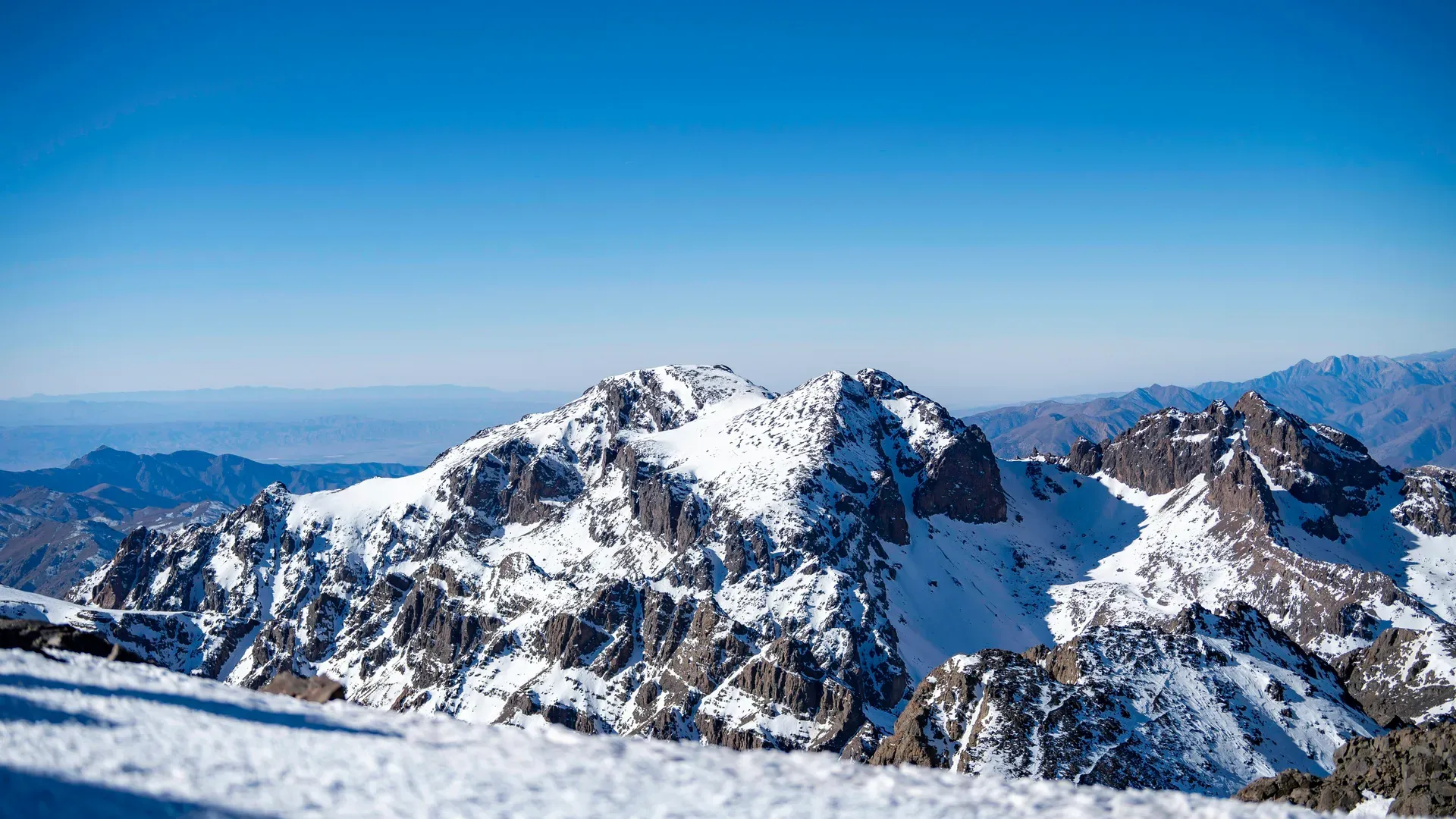
Rising 4,167 meters above sea level, this rugged volcanic peak challenges trekkers with steep shale scree and freezing alpine conditions. Reaching the summit at sunrise rewards climbers with 360-degree views stretching across the snow-topped High Atlas range to the Sahara Desert.
Find Guided ToursMount Toubkal, also known as Jbel Toubkal, is a prominent mountain peak located in central Morocco's High Atlas range. Standing at an elevation of 4,167 meters (13,671 feet), it is the highest peak in Morocco, North Africa, and the Arab world. The mountain is situated approximately 63 kilometers south of Marrakesh and drops a dramatic 1,800 meters to the south toward Lac d'Ifni. With a topographic prominence of 3,755 meters, the peak ranks 27th globally in topographic isolation.
Unlike much of the surrounding sedimentary High Atlas range, the Toubkal massif is composed of volcanic rocks. Over time, these formations have weathered into sharp alpine crests and steep cliffs. The mountain's ecosystem transitions rapidly from overgrazed lower slopes to high-altitude juniper forests and rugged alpine meadows.
The area surrounding the peak has been populated by indigenous Berber tribesmen and nomads for over 10,000 years. Because of this long history, local residents likely reached the summit long before any foreign explorers. The mountain holds deep cultural significance as a symbol of strength tied to Berber heritage. The lower trails also feature the pastoral shrine of Sidi Chamarouch, an important pilgrimage site for local Muslims.
The first officially recorded European ascent took place on June 12, 1923, led by French aviator and explorer Marquis René de Segonzac. To open the peak to global mountaineers, the French Alpine Club constructed the Neltner Refuge at an altitude of 3,207 meters in 1938. Four years later, in 1942, the Moroccan government established Toubkal National Park to protect the region's unique alpine environment and promote mountain conservation.
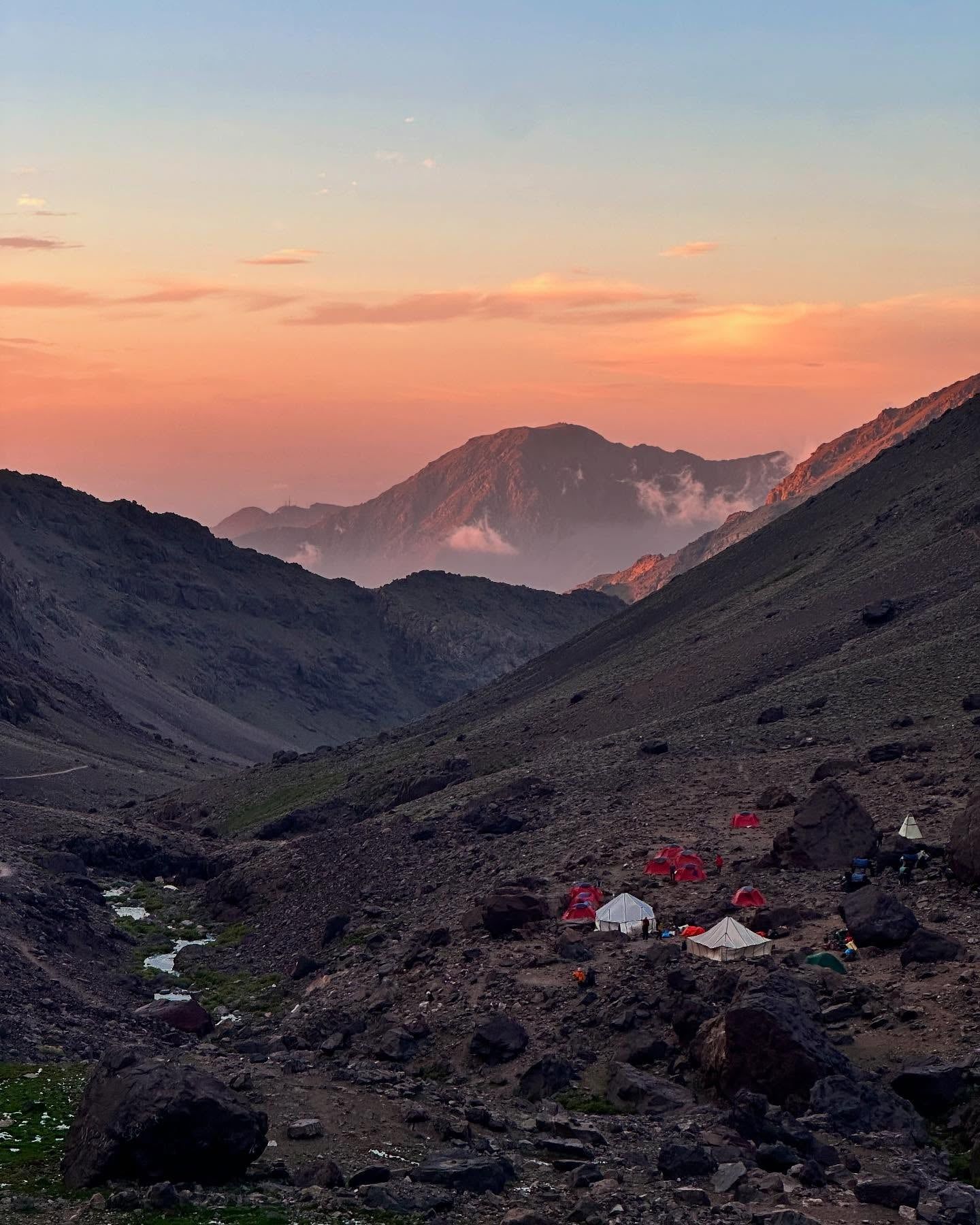
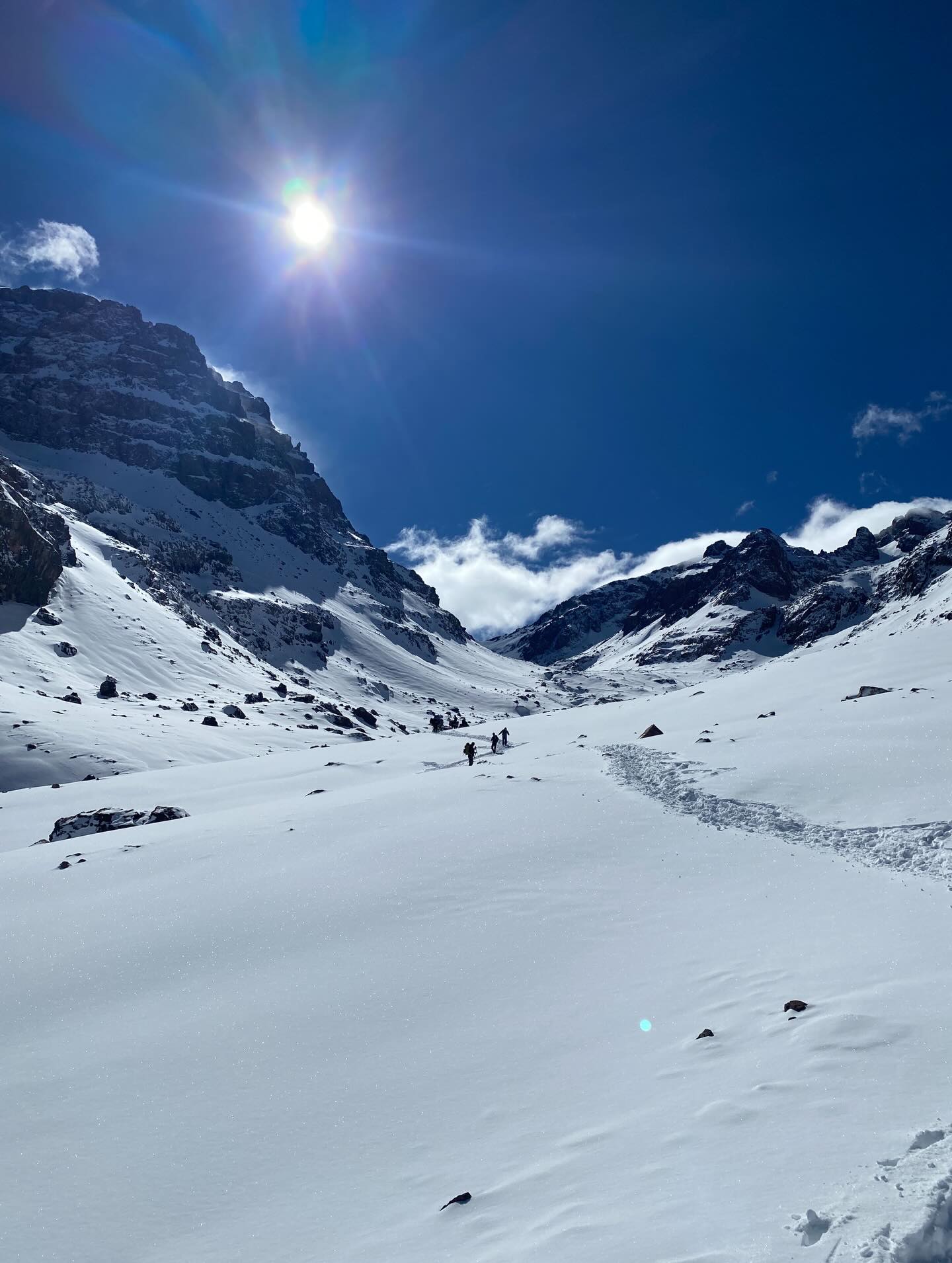
Discover the full history and cultural significance on our About page.
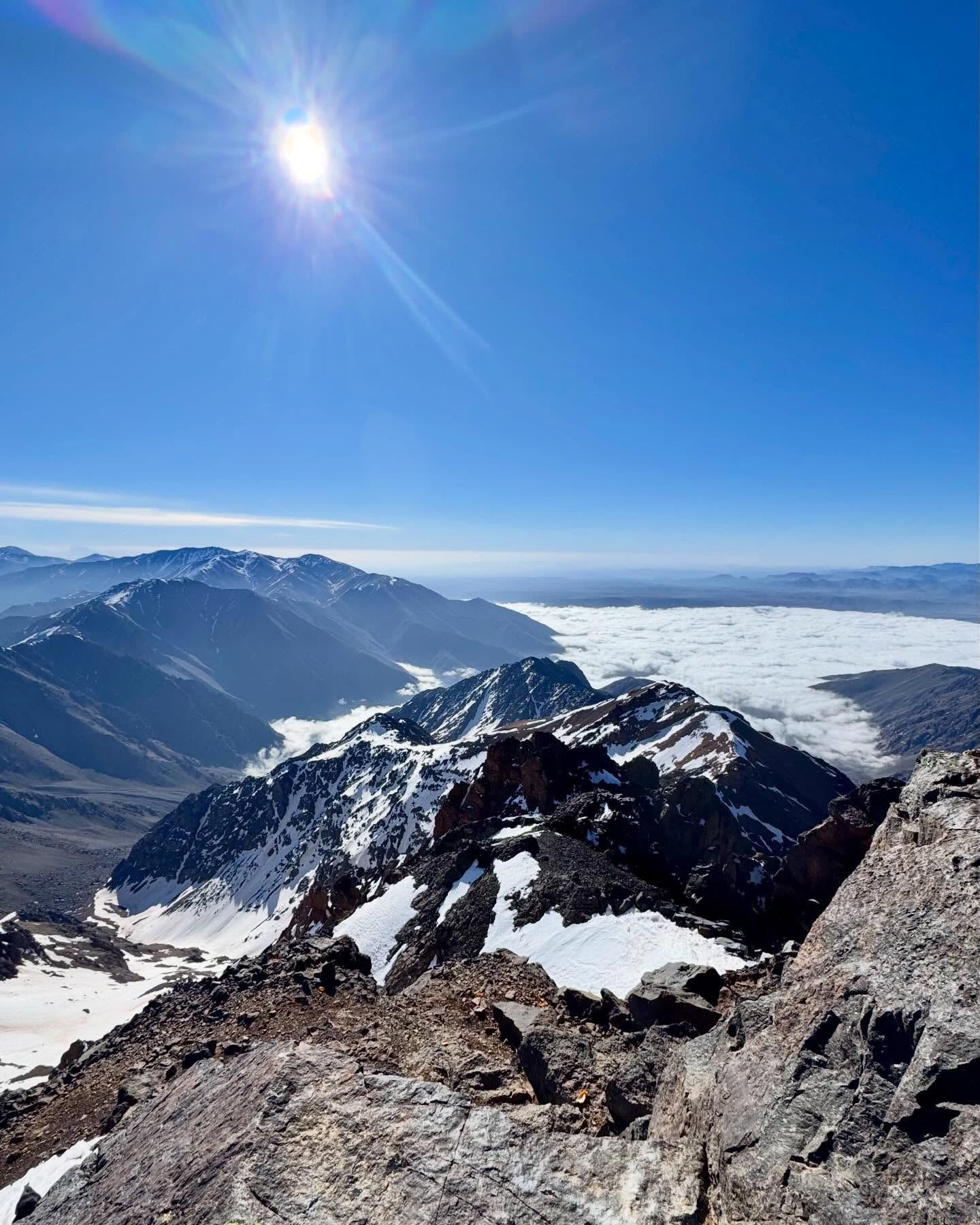
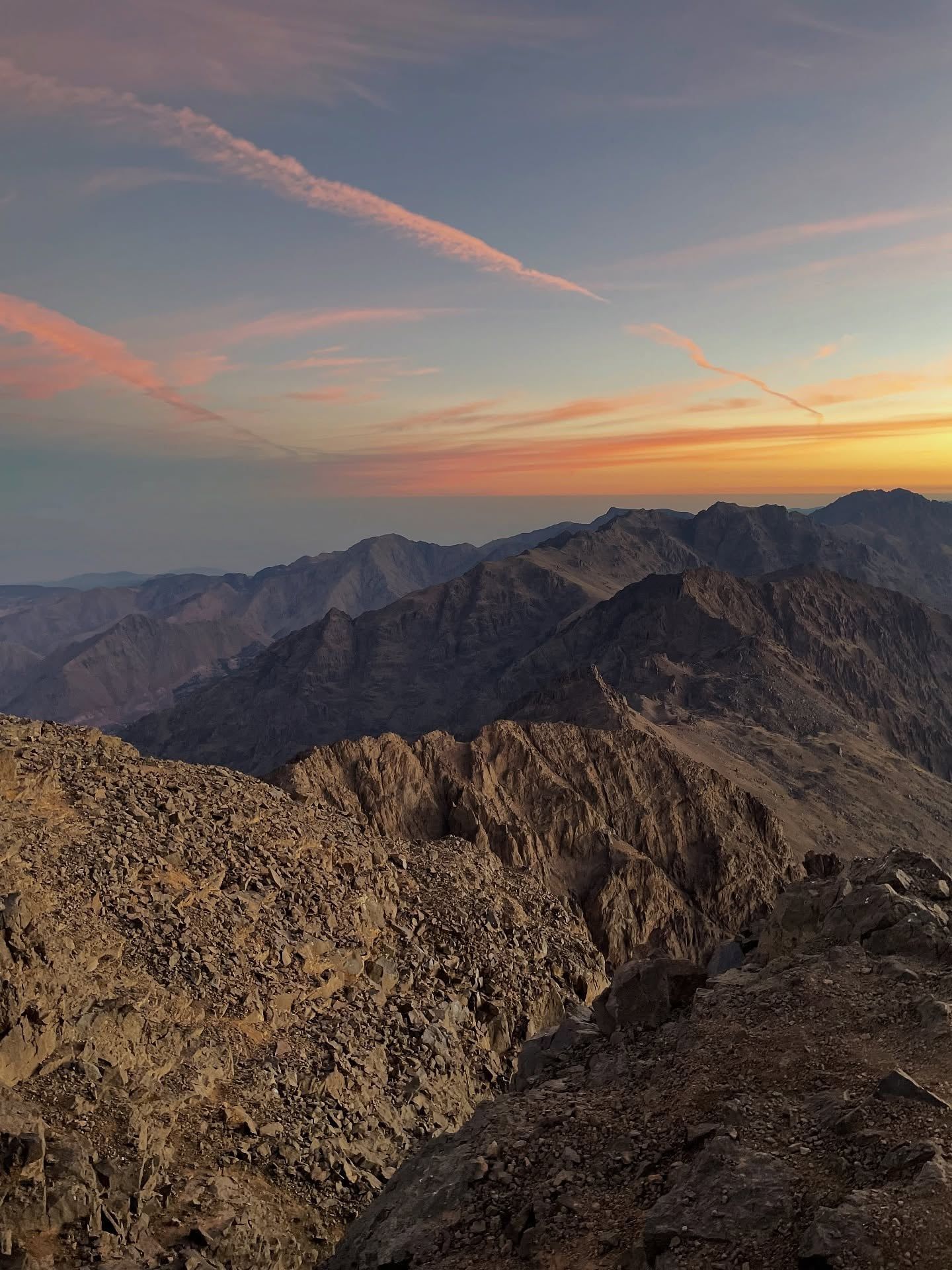
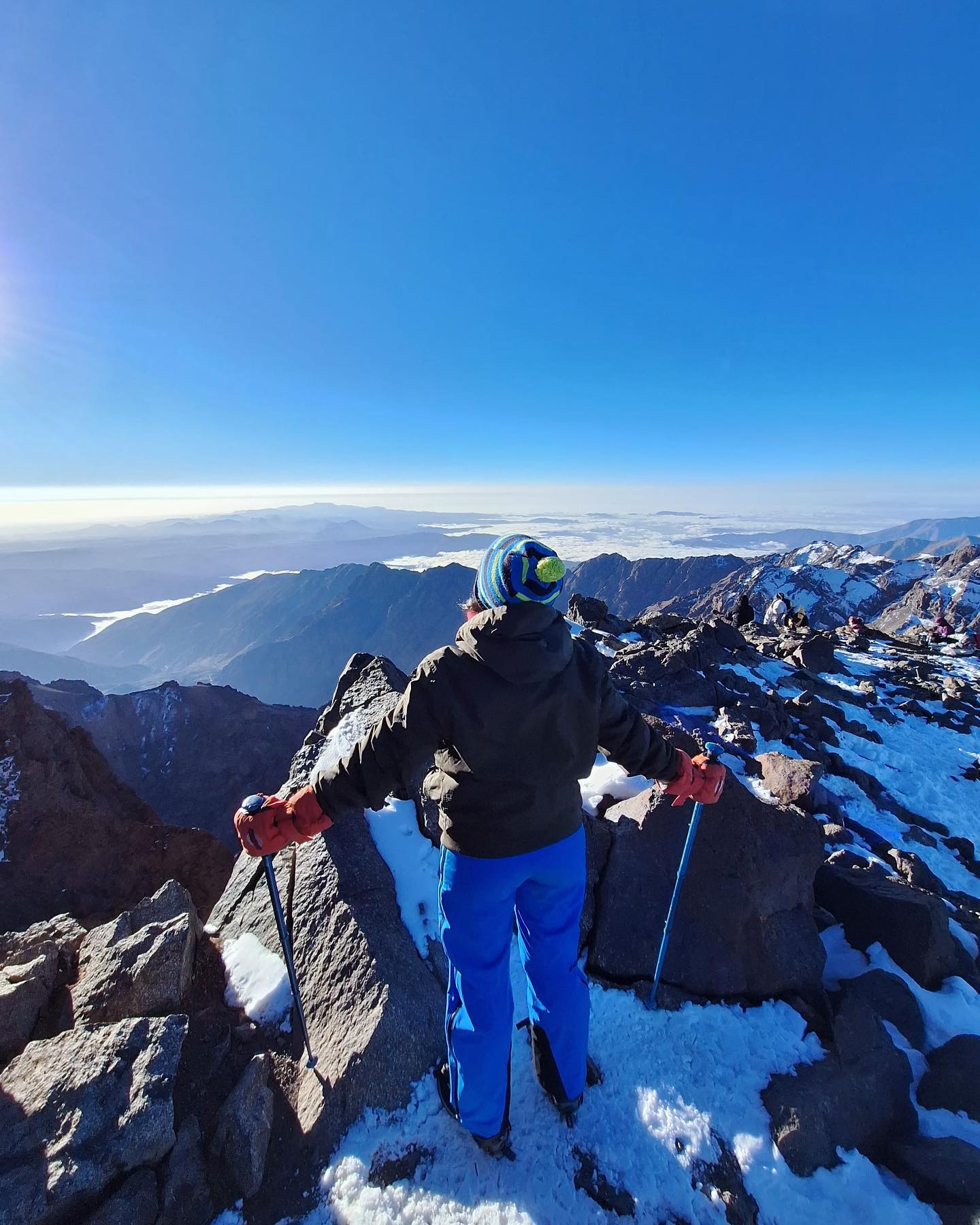
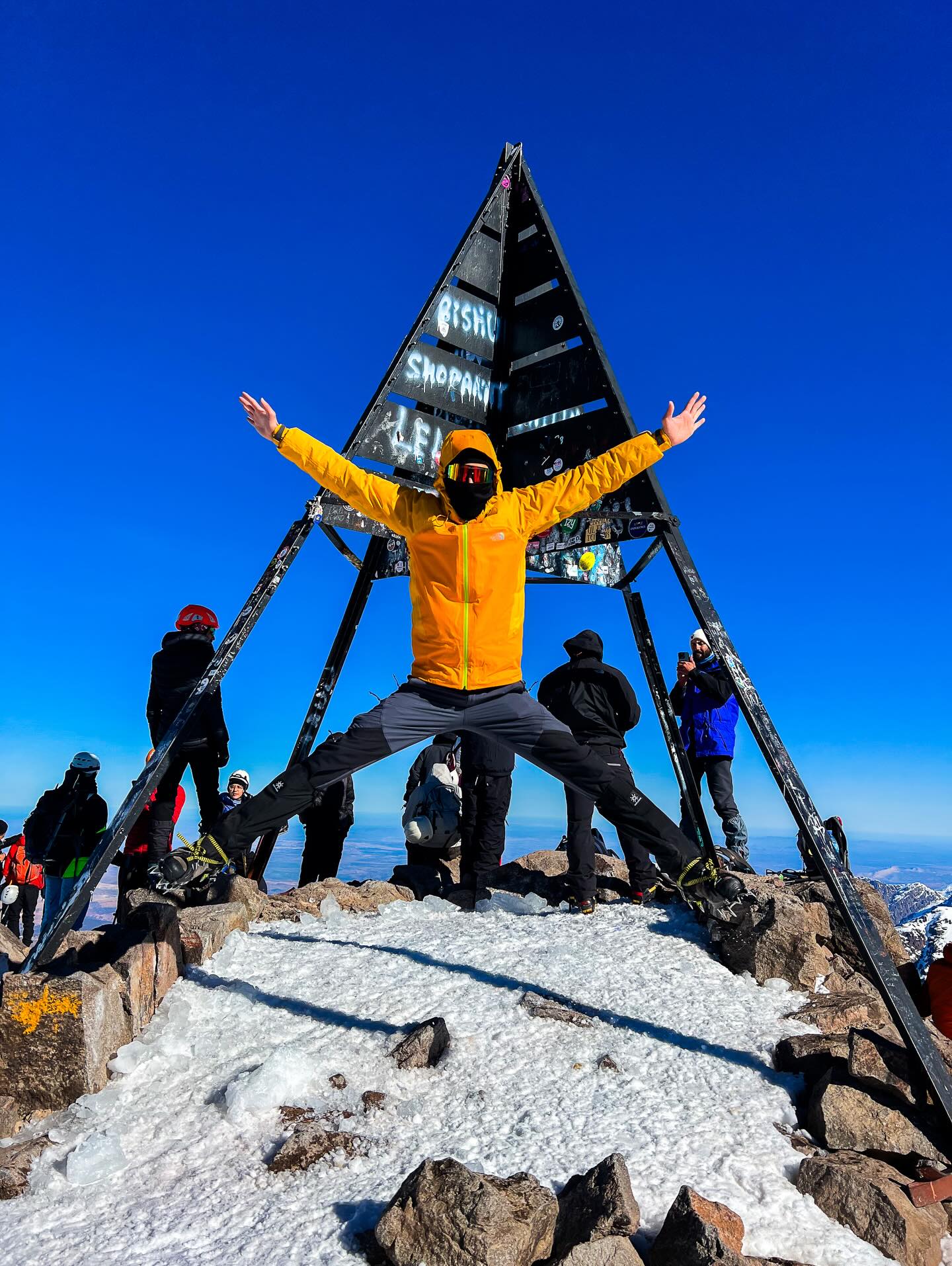
Reaching the 4,167-meter peak at dawn reveals 360-degree views stretching across the snow-capped High Atlas mountains and down into the Sahara Desert. Hikers stand beside the iconic metal trigonometric pyramid marker in freezing temperatures. The physical achievement is palpable in the crisp, high-altitude morning air.
Sleeping at the historic Neltner Refuge, situated at 3,207 meters, provides a classic alpine atmosphere. Climbers from around the world gather in the crowded dining hall. They drink sweet mountain mint tea and share hot tagine before resting in the 90-bed dormitory rooms.
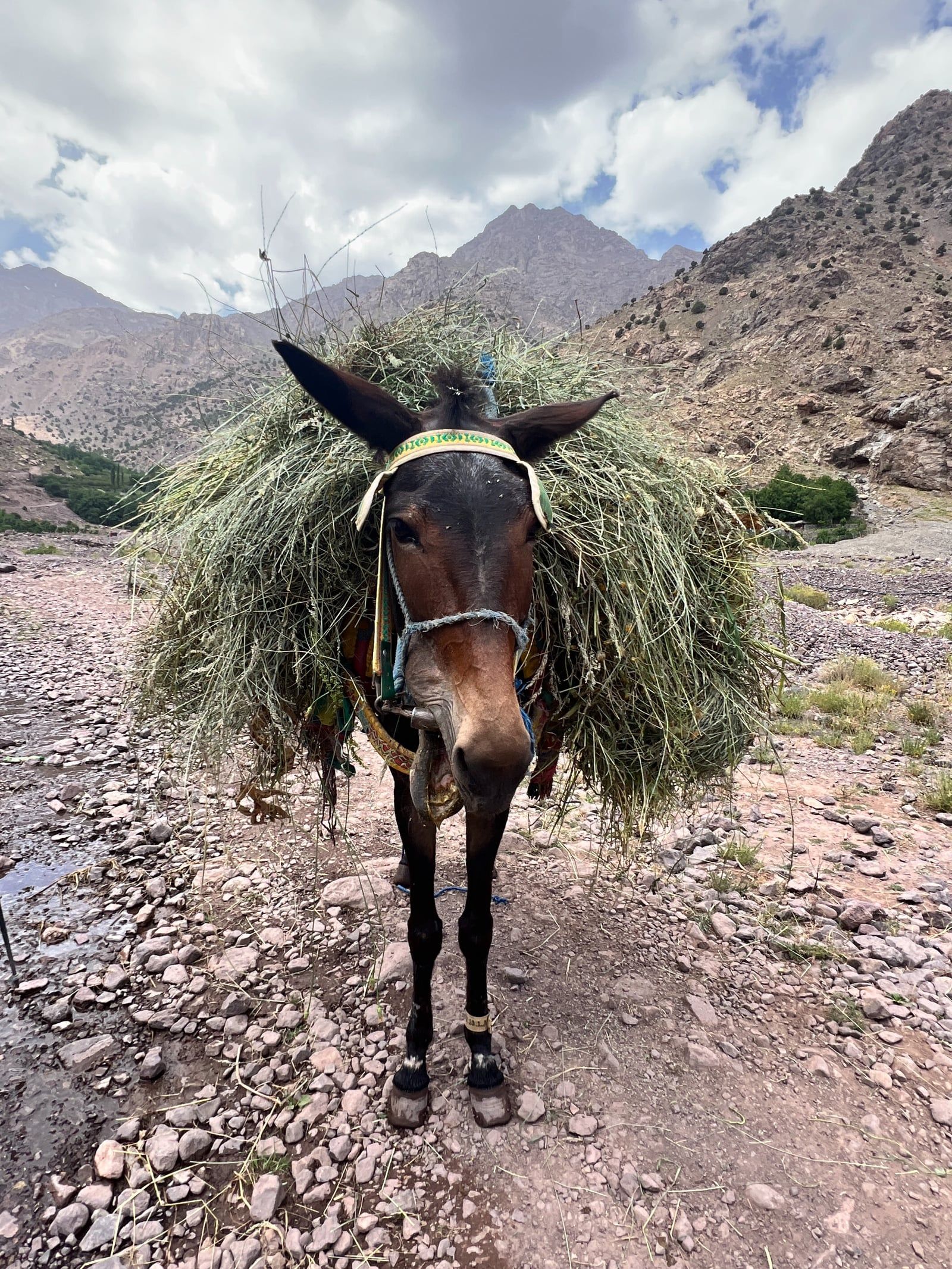
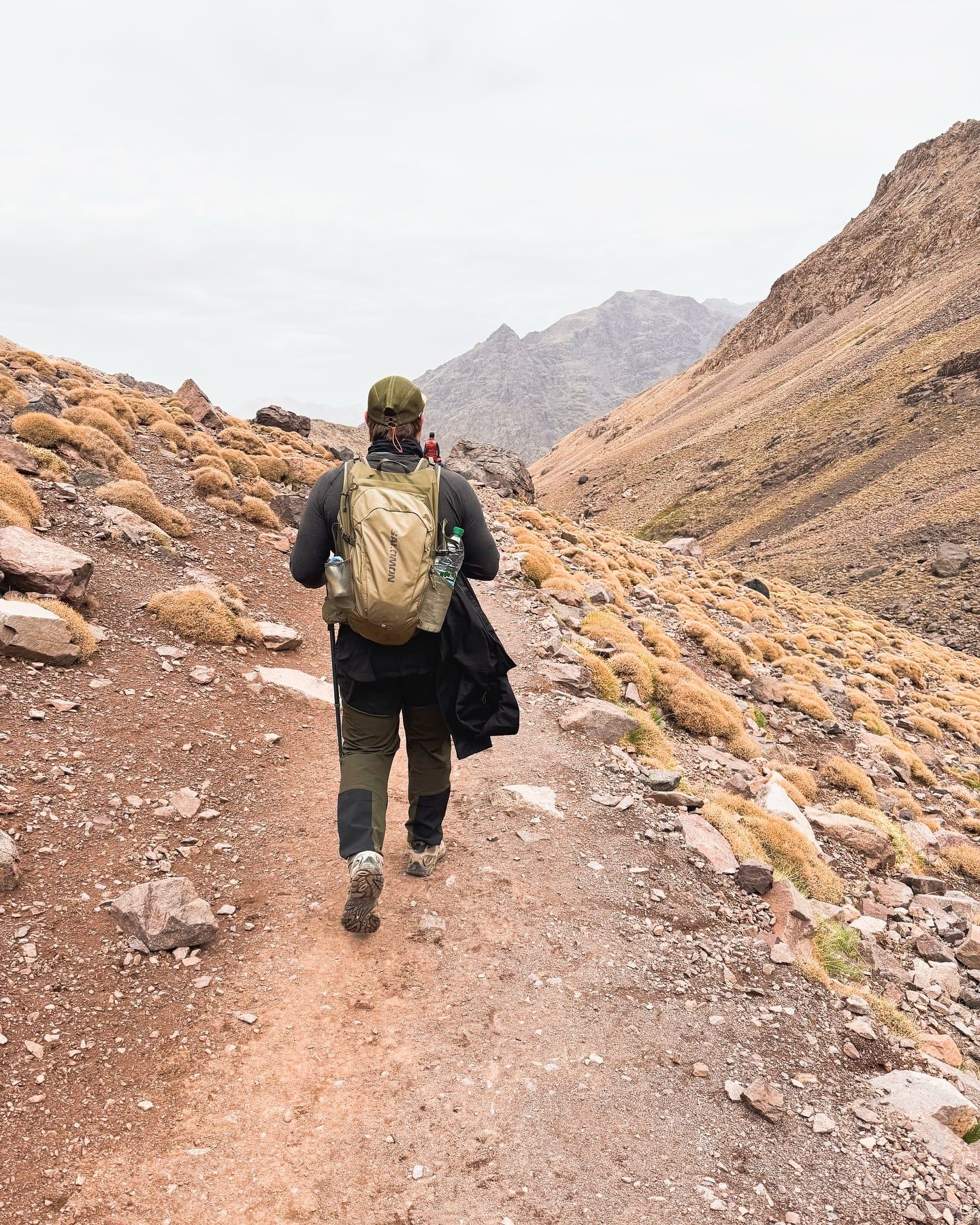
The hike begins in Imlil, passing through valleys filled with walnut, cherry, and almond orchards. As you ascend toward the stone-built village of Aroumd, you will observe farmers tending terraced agricultural plots. Donkeys transport goods along the steep, narrow pathways that wind through the High Atlas terrain.
Along the rocky mule tracks, a white-painted stone structure sits beneath towering cliffs. This pastoral shrine of Sidi Chamarouch serves as a major pilgrimage site for local Muslims. Non-Muslims cannot cross the stone bridge to enter, but viewing it from the scenic river provides a striking cultural encounter.
Hand-picked tours with free cancellation and verified reviews
 Free Cancellation 7h 30min
  Free Cancellation 48h
  Free Cancellation 48h
  Free Cancellation 48h
  Free Cancellation 48h
  Free Cancellation 48h
  Free Cancellation 48h
  Free Cancellation 48h
 The optimal periods to climb Mount Toubkal are spring (April to May) and autumn (September to October). During these months, moderate temperatures and stable weather offer the safest conditions for reaching the 4,167-meter summit.
Spring provides moderate temperatures and relatively stable weather across the High Atlas. These favorable conditions make it an ideal season for non-technical hikers aiming for the peak.
While the mountain remains popular for non-technical hiking, the surrounding areas become intensely hot. Travelers passing through Marrakech will face extreme temperatures ranging from 80°F to 100°F.
Autumn matches spring with moderate temperatures and stable weather patterns. Climbers can safely complete the standard two-day trek to the summit without needing specialized winter mountaineering equipment.
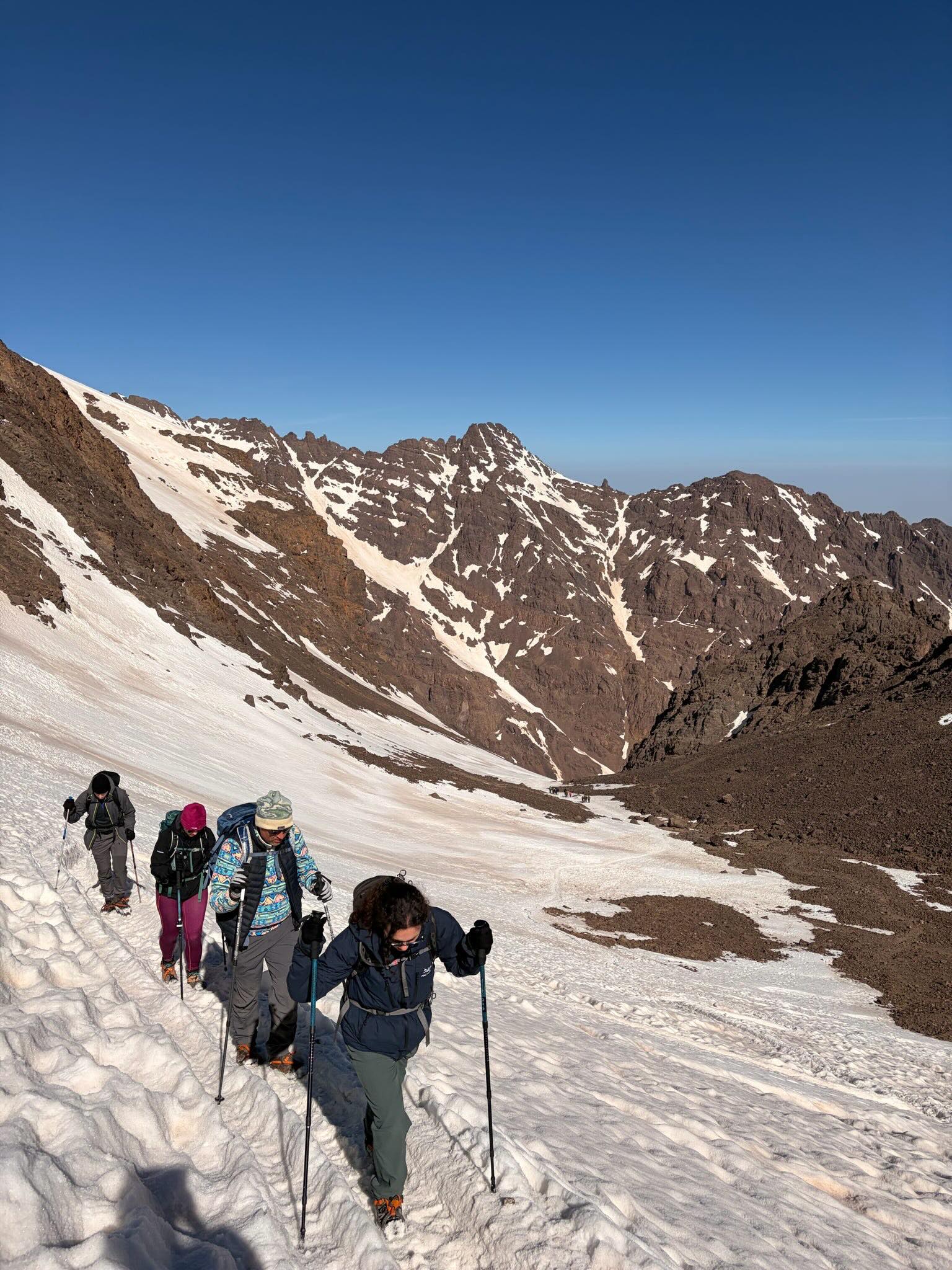
Freezing temperatures transform higher elevations into a snowy, icy alpine environment above 3,500 meters. Climbing is potentially dangerous and strictly requires crampons, ice axes, and advanced mountaineering experience.
Mount Toubkal and the surrounding Toubkal National Park allow 24-hour access with no official opening or closing times. Most hikers depart from mountain refuges between 5:00 AM and 6:00 AM to reach the summit by sunrise.
| Category | Price |
|---|---|
| Mount Toubkal Ascent | Free |
| National Park Entry Fee | 20 to 30 MAD |
| Mandatory Licensed Guide | 400 to 600 MAD per day |
Hiring a licensed mountain guide is mandatory to pass official checkpoints along the trail. Overnight stays at the Neltner Refuge (CAF Toubkal Refuge) must be booked in advance, particularly during peak seasons.
For complete schedules and ticket prices, visit our Hours & Fees page.
Reaching Mount Toubkal requires traveling 63 kilometers south of Marrakech to the mountain trailhead village of Imlil. From this starting point, visitors proceed on foot or by mule into the higher elevations of the High Atlas range.
📍 Toubkal National Park, High Atlas Mountains, Morocco
Private or shared grand taxis operate daily routes from Marrakech directly to the mountain trailhead village of Imlil. The drive covers a distance of 63 kilometers along winding mountain roads heading south into the High Atlas range. This trip takes approximately one hour and 30 minutes to complete. Travelers can expect to pay between 400 and 600 MAD for a private vehicle.
To travel from the main town of Imlil to the higher village of Aroumd, tourists frequently hire mules to transport their heavy luggage. This traditional mode of transport covers a two-kilometer distance along steep mountain trails. The trip takes about 40 minutes to complete. Hiring a mule costs between 200 and 300 MAD per day.
After arriving at the Imlil trailhead, visitors must hike to the Neltner Refuge at 3,207 meters. This initial segment of the standard two-day trek covers 10 kilometers of rugged terrain. Hikers typically complete this ascent in about seven hours. Accessing the mountain trails requires hiring a mandatory licensed guide, which adds to the overall trekking cost.
For detailed transport options and routes, visit our Directions page.
There are no ATMs in the gateway village of Imlil or along the mountain trails. You must carry enough Moroccan Dirhams or Euros to cover your expenses. This cash is necessary for purchasing water, trailside snacks, and tipping your mandatory guides and porters.
Hikers should completely avoid wearing cotton shirts, socks, or underwear on the mountain. Cotton retains moisture from sweat and significantly increases the risk of hypothermia in freezing high-altitude temperatures. Pack high-quality merino wool or synthetic base layers to remain dry and warm.
The historic Neltner Refuge at 3,207 meters features cramped dormitory rooms that sleep up to 27 people. The tight quarters create a notoriously noisy environment. Pack high-quality earplugs and a sleep mask to block out snoring and the early morning alarms of other climbing groups.
Summit attempts typically begin in complete darkness between 5:00 AM and 6:00 AM. A bright head torch is absolutely critical for safely navigating the trails before sunrise. Keep the device easily accessible in your backpack to avoid searching through your gear in dark refuge corridors.
The steep descent from the 4,167-meter summit involves navigating loose shale scree and rocky boulder fields. This terrain is highly punishing on the knees and joints. Trekking poles are highly recommended to help maintain balance and reduce physical fatigue during the three-hour downward hike.
The Moroccan government requires all trekkers to hire a licensed mountain guide, which costs between 400 and 600 MAD per day. Official checkpoints along the route will turn back unguided hikers. You must also respect local customs, such as the strict restriction prohibiting non-Muslims from entering the Sidi Chamarouch shrine.
As the second-highest peak in the region, Ouanoukrim provides spectacular alpine climbing for experienced trekkers. The rugged mountain delivers dramatic, alternative views of the Toubkal massif and the High Atlas range.
This high-altitude lake sits 1,800 meters below the steep southern drops of Mount Toubkal. Adventurous hikers can explore its peaceful natural setting surrounded by towering volcanic cliffs.
Known for its cherry and almond orchards, this lush valley provides a refreshing escape into cooler weather. Visitors can hike to seven waterfalls near Setti Fattma and dine at riverside restaurants.
Read what travelers share about their experience visiting Mount Toubkal — from practical tips to personal highlights.
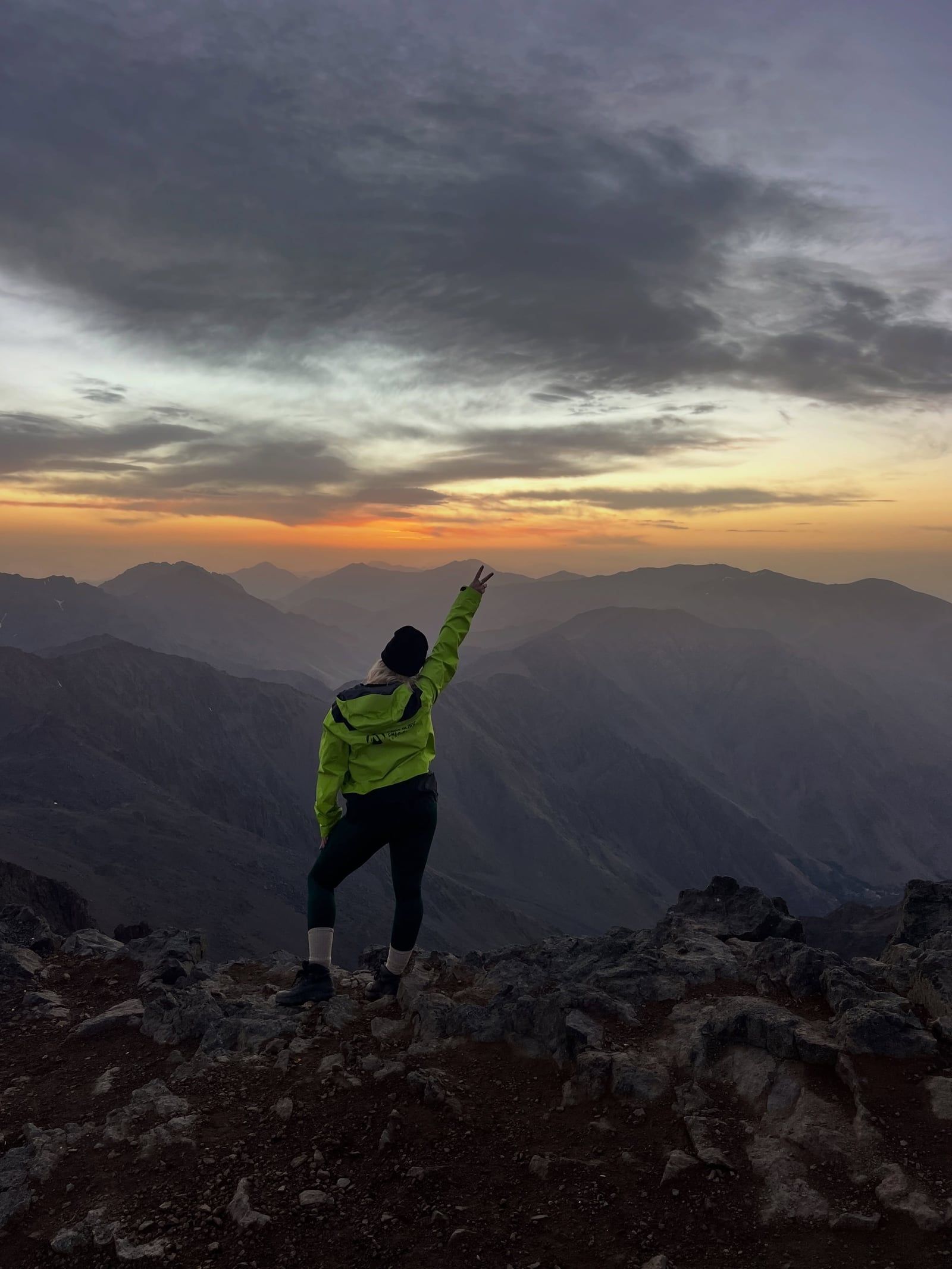
Yes, hiring a licensed guide is mandatory to pass official checkpoints along the trail. A guide typically costs between 400 and 600 MAD per day, or 800 to 1,200 MAD for a standard two-day trek. Attempting the climb without one is illegal and you will be turned back.
The standard trek takes two days to complete. Hikers walk 10 kilometers to the mountain refuge on the first day, which takes about seven hours. The second day involves a 17-kilometer round trip to the 4,167-meter summit and back down to the village of Imlil.
The trailhead is located in the village of Imlil, approximately 63 kilometers south of Marrakech. You can take a private or shared grand taxi for the 1.5-hour drive, which generally costs between 400 and 600 MAD for a private ride.
Hikers must wear high-ankle boots and avoid cotton clothing, which retains moisture and increases the risk of hypothermia. Bring high-quality synthetic or merino wool base layers, fleeces, windproof jackets, and a bright head torch for the 5:00 AM summit start. If you climb between November and March, you will also need crampons and ice axes.
The summit climb is highly demanding and generally unsafe for young children or elderly travelers lacking exceptional physical fitness. The route requires walking up to 17 kilometers in a single day over steep drop-offs, loose shale, and boulder fields. Families with children should opt for easier low-altitude day hikes in the Imlil or Ourika valleys instead.
The most favorable conditions occur during spring (April to May) and autumn (September to October) when temperatures are moderate and the weather is stable. Summer is also popular for non-technical hiking, though temperatures in nearby Marrakech can reach 80°F to 100°F. Winter climbs from November to March require specialized mountaineering gear due to heavy snow and ice.
There are no ATMs available in the gateway village of Imlil or along the mountain trails. You must carry enough cash in Moroccan Dirhams (MAD) or Euros to pay for your guide, the 20 to 30 MAD National Park entry fee, tips, and trailside snacks.
Most climbers stay at the Neltner Refuge, also known as the CAF Toubkal Refuge, located at an altitude of 3,207 meters. The facility features dormitory-style lodging with approximately 90 beds and requires advance booking, especially during peak seasons. Because up to 27 people share a single room, bringing earplugs and a sleep mask is highly recommended.
Browse verified tours with free cancellation and instant confirmation.
Find Tours