Explore the High Atlas Mountains on a two-day Mount Toubkal trek departing from Marrakech. These guided tours include overnight refuge accommodation, meals, and experienced local guides to help you safely reach the highest peak in North Africa.
 Free Cancellation
 Summit Mount Toubkal on a two-day trek from Marrakech, passing through Berber villages to reach North Africa's peak.
 Free Cancellation
 Summit Mount Toubkal on a small-group trek with wild camping at 3,000m and authentic Berber hospitality.
 Free Cancellation
 A two-day guided hike from Marrakech to the summit of Mount Toubkal, featuring scenic valleys and a sunrise peak finish.
 Free Cancellation
 Trek the High Atlas to summit Jebel Toubkal, passing through remote Berber villages and past the volcanic Lac D'Ifni.
 Free Cancellation
 A private 2-day trek to the summit of Mount Toubkal with an overnight stay and a sunrise finish at the peak.
 Free Cancellation
 Summit North Africa's highest peak on a focused two-day trek from Marrakech to the 4,167-meter top of Mount Toubkal.
 Free Cancellation
 Reach the 4,167m summit of Mount Toubkal on a guided 2 or 3-day trek starting from Marrakech.
 Free Cancellation
 Climb North Africa's highest peak on a guided trek through the rugged High Atlas Mountains of Morocco.

A year-round, non-technical trek to the 4,167m summit of Mount Toubkal, the highest peak in North Africa.
 Free Cancellation
 Reach the 4,167m summit of Mount Toubkal on a two-day trek through the High Atlas Mountains.
Read what travelers share about their experience visiting Mount Toubkal — from practical tips to personal highlights.
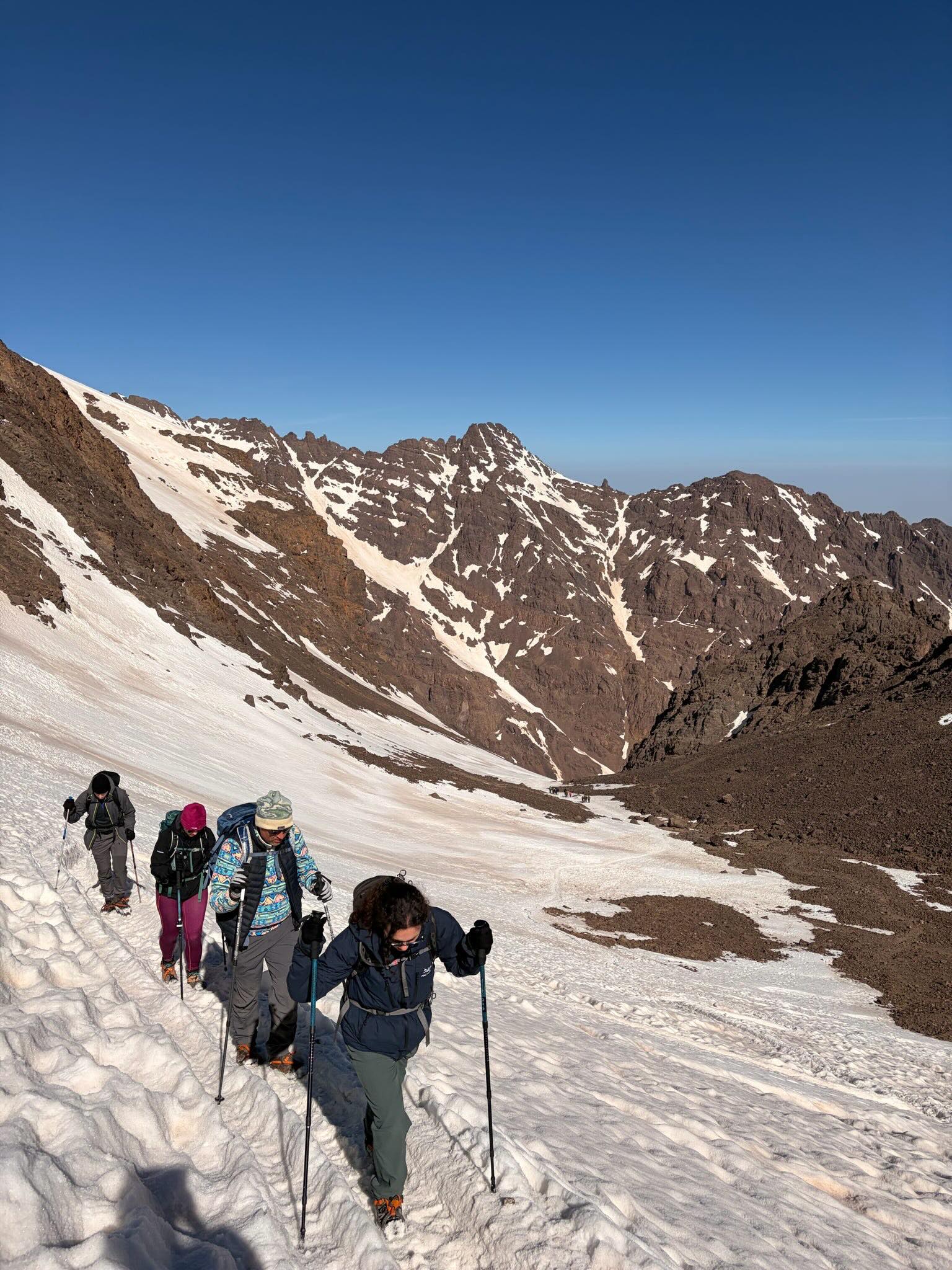
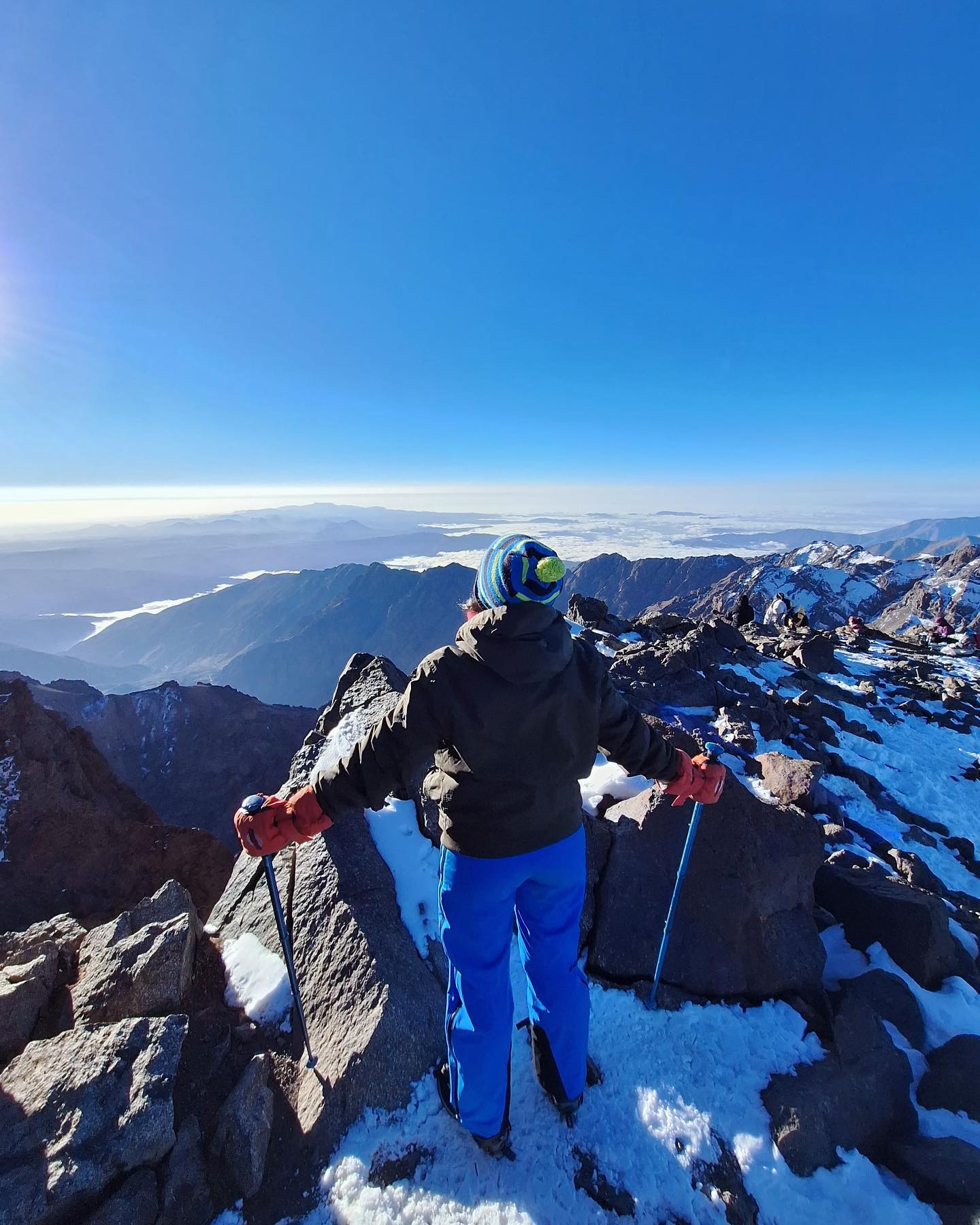
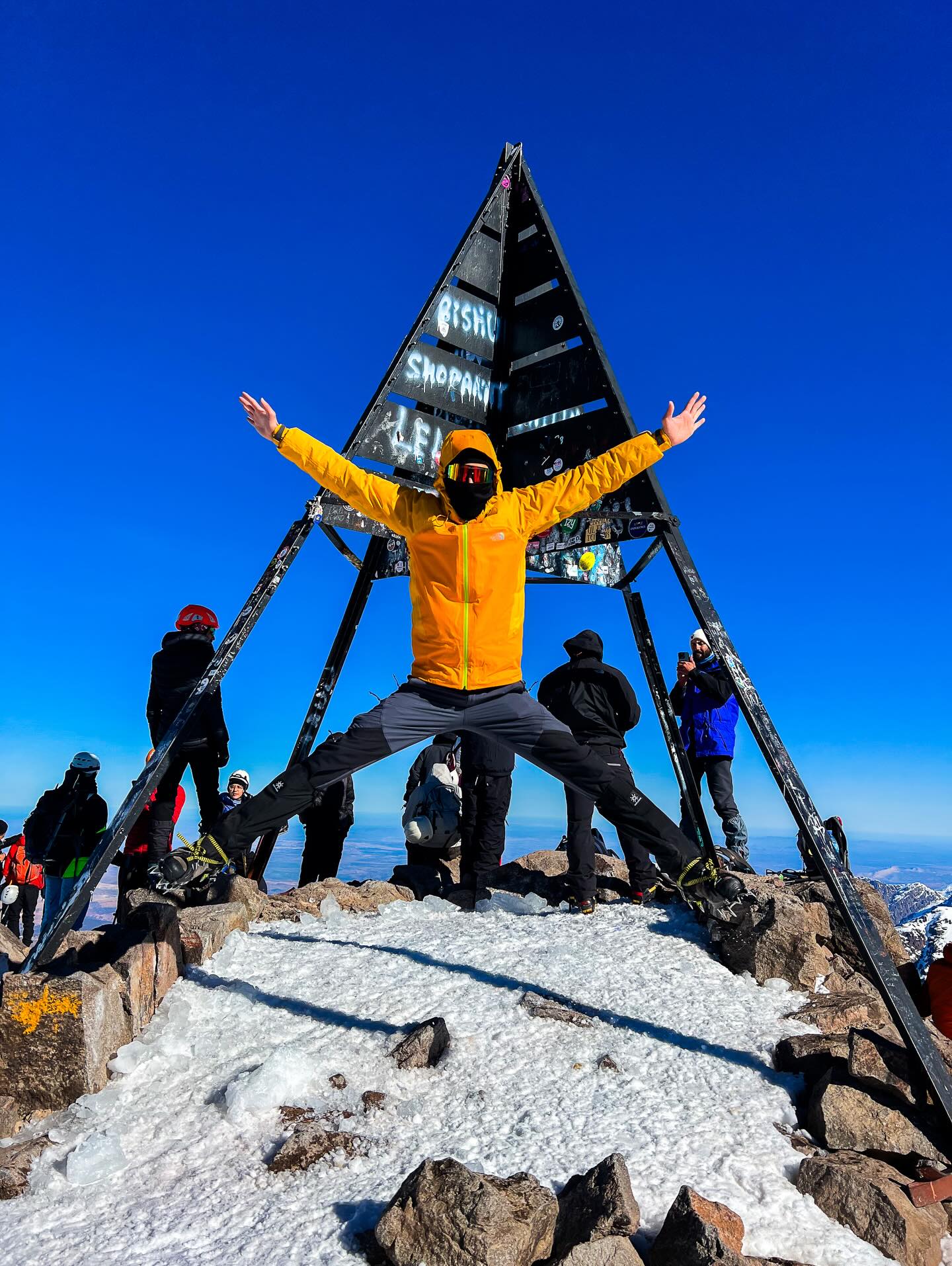
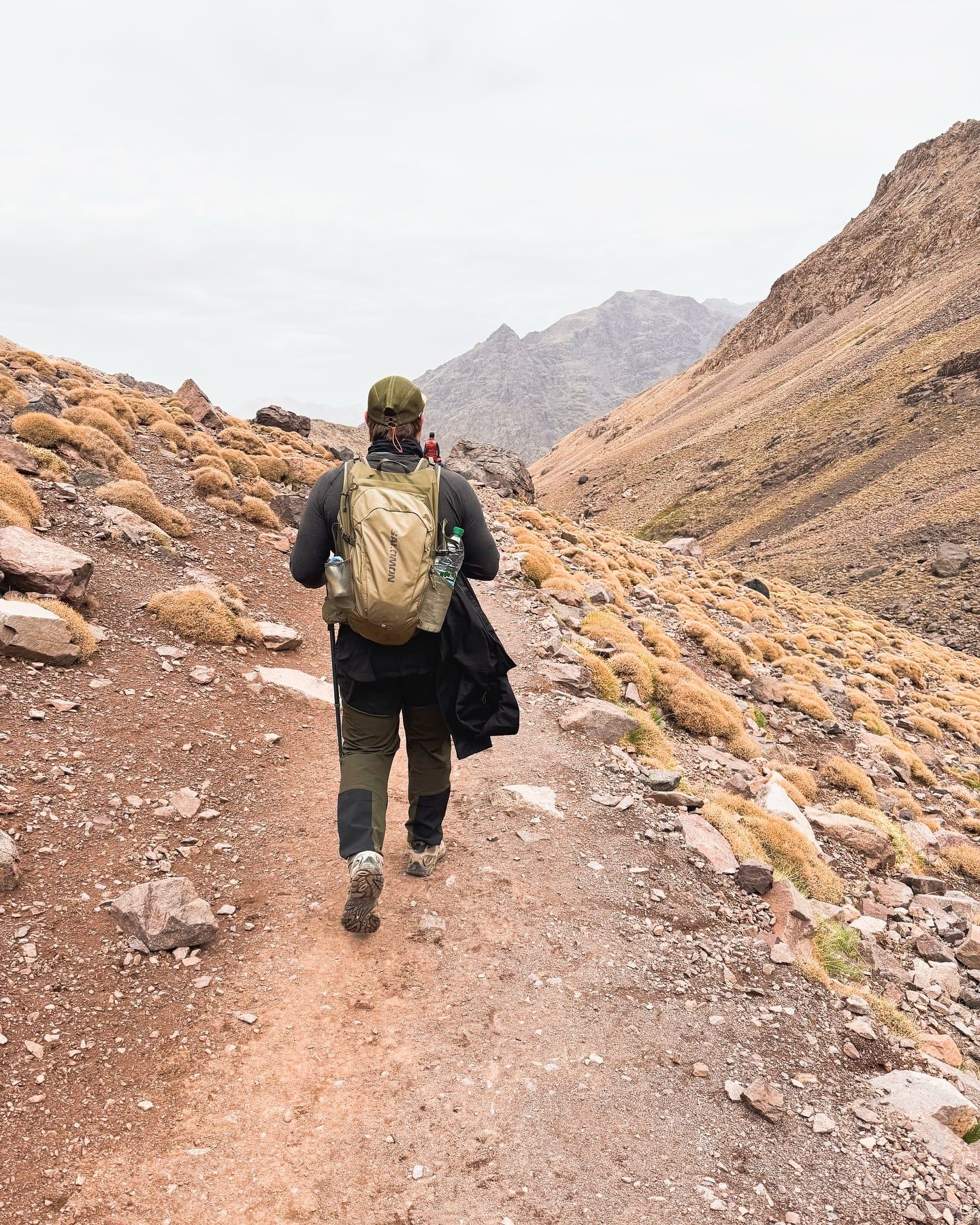
Trekking Mount Toubkal offers a challenging but highly rewarding journey through the dramatic High Atlas Mountains. Over the course of your tour, you will hike through traditional Berber villages, tackle steep rocky paths, and ultimately stand on the highest peak in North Africa.
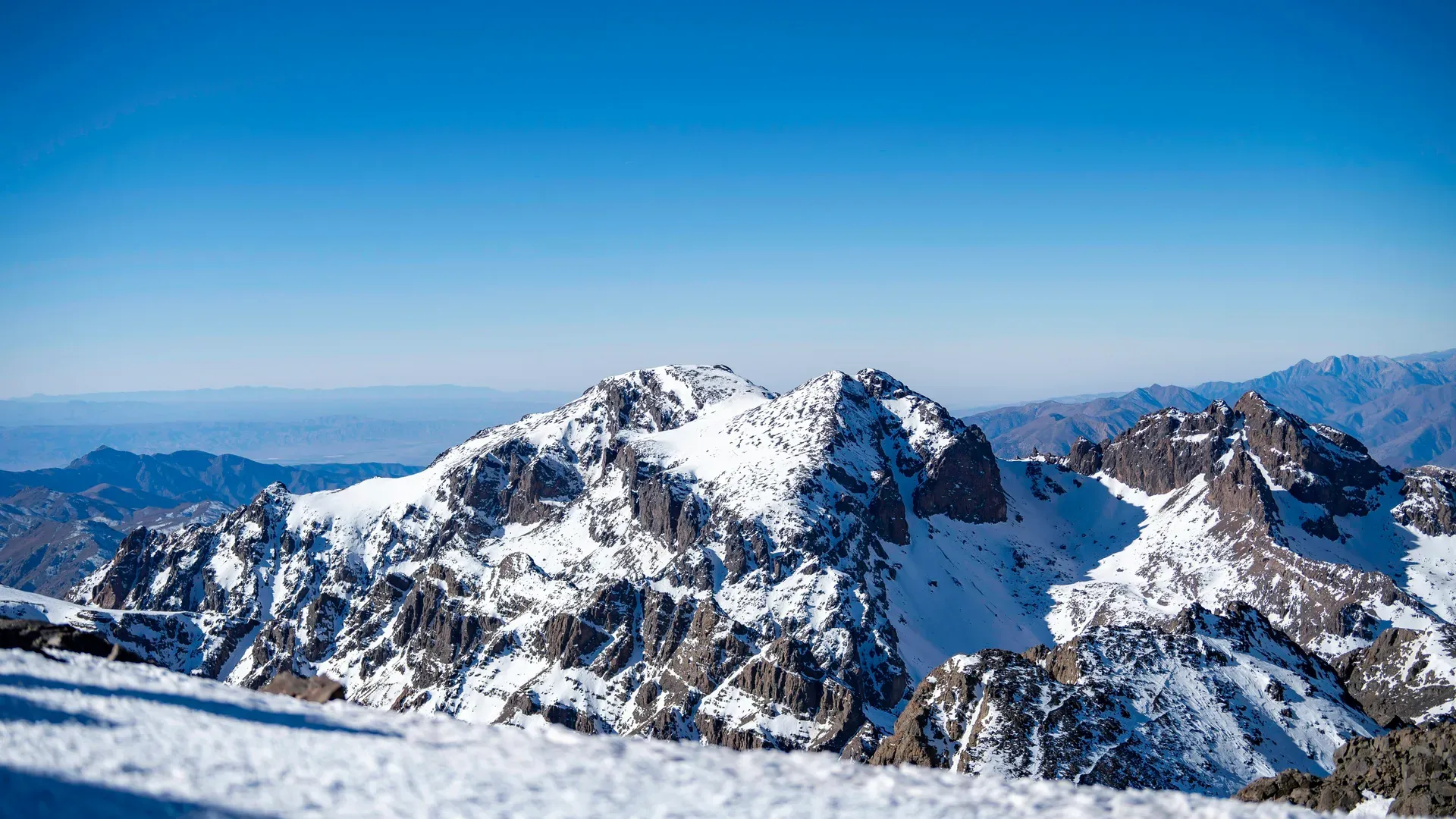
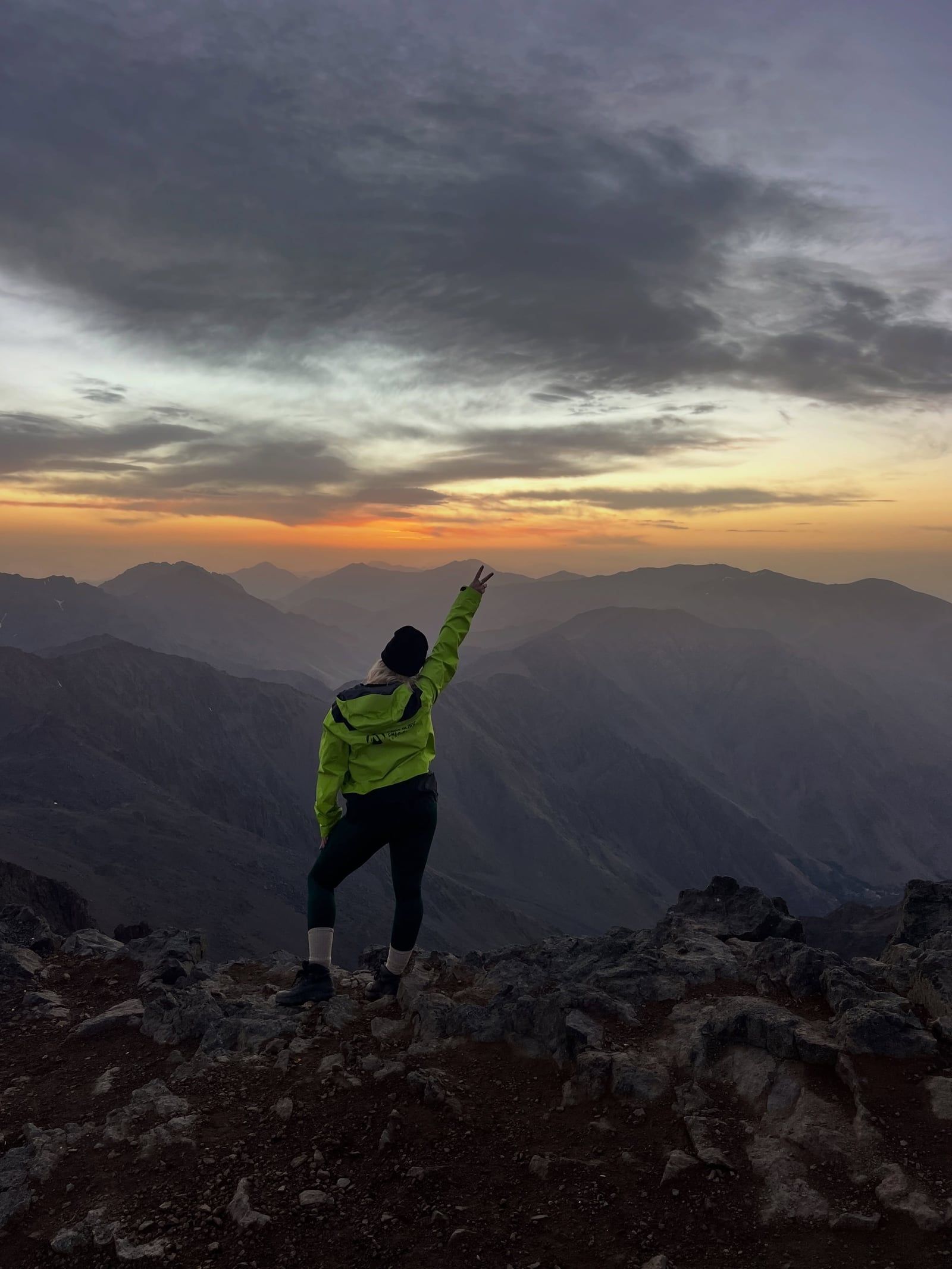
Reaching the 4,167-meter peak at dawn reveals breathtaking 360-degree views stretching across the snow-topped High Atlas peaks all the way to the Sahara Desert. Stand beside the iconic metal pyramid marker and celebrate your achievement.
Spend the night at the historic CAF Toubkal Refuge located at 3,207 meters. Climbers gather in the bustling dining hall to eat hot tagine and drink sweet mint tea before resting in dormitory beds.
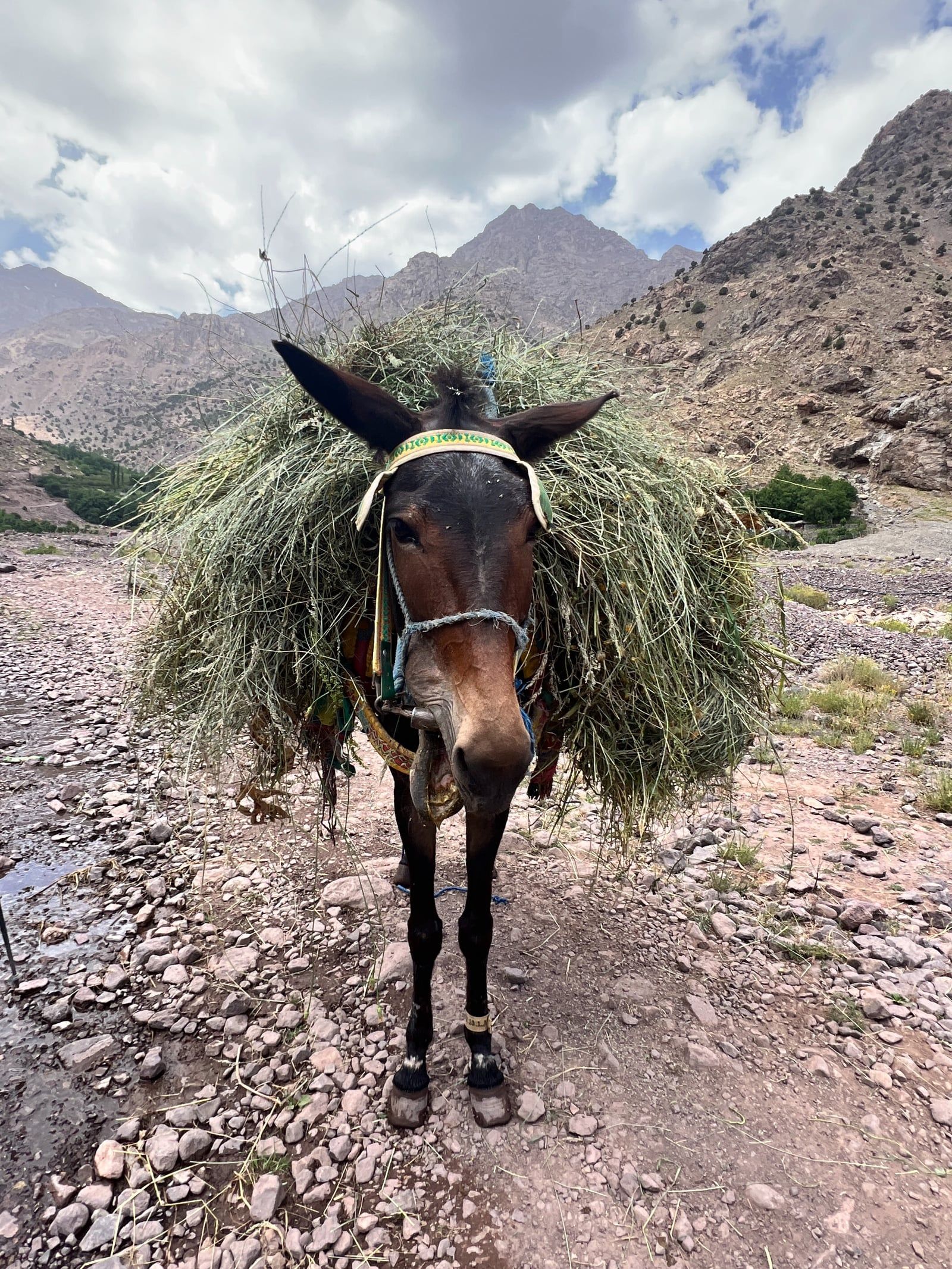
Start your trek in the lush valley town of Imlil and hike through Aroumd, a traditional stone-built village. You will see locals tending terraced farmland and donkeys navigating narrow, stony mountain pathways.
Trek past this picturesque pastoral shrine nestled beneath towering cliffs. Cross the scenic mountain river to view the white-painted stone structure, which serves as an important pilgrimage site for local Muslims.
Navigate steep, loose shale scree and boulder fields using the 'rest step' technique. The volcanic rock formations and deep valleys provide a dramatic and physically demanding backdrop for your ascent.
Planning your Mount Toubkal trek requires careful preparation, as this is a demanding high-altitude adventure. Here is what you need to know before securing your spot on a tour.
Following safety regulations enacted in 2018, hiring a licensed mountain guide is legally required to climb Mount Toubkal. All organized tours include a certified local guide to ensure you can pass the official trail checkpoints.
Most tours are 2-day guided treks departing from Marrakech, available as either private or small-group experiences. The standard itinerary covers a 10km hike to the refuge on day one, and a grueling 17km round-trip to the summit on day two.
While the summer climb is non-technical, it is highly physically demanding. Travelers need at least a moderate to high level of fitness to handle the steep elevation gains, loose scree, and long hours of walking.
Tours generally include round-trip transport from your Marrakech hotel, meals on the trek, mule support for your heavy luggage, and overnight refuge accommodation. Check specific tour listings, as sleeping bags may need to be rented separately.
Summer requires standard trekking gear, but winter climbs (November to March) demand specialized equipment like crampons and ice axes due to solid sheets of ice. Ensure your tour provider supplies or rents these if you book a winter trek.
The summit sits at 4,167 meters, where oxygen levels drop by 40%. It is highly recommended to arrive in Marrakech at least a day early to rest, and to stay hydrated during the trek to prevent acute mountain sickness.
There are no ATMs in the gateway village of Imlil or on the mountain. Bring enough cash in Moroccan Dirhams or Euros to pay for trailside snacks, bottled water, souvenirs, and tips for your guide and muleteers.
Swipe to see more
| Standard 2-Day Group Trek | Private 2-Day Trek | Summer Camping Trek | |
|---|---|---|---|
| Tour Type | Guided Group Tour | Private Tour | Small Group Camping Tour |
| Best for | Budget-conscious hikers and solo travelers wanting to join a group | Couples, friends, or families wanting a personalized pace and private transport | Hikers wanting to avoid crowded refuge dorms and sleep closer to nature |
| Duration | 2 Days / 1 Night | 2 Days / 1 Night | 2 Days / 1 Night |
| Price from | ~$120 USD | ~$150 - $211 USD | ~$176 USD |
Swipe to see more
Mount Toubkal and the surrounding Toubkal National Park do not have official opening or closing hours, allowing for 24-hour access to the trails.
However, trekking schedules are highly structured. Hikers typically depart from the mountain refuges in complete darkness between 5:00 AM and 6:00 AM. This early start is necessary to reach the summit by sunrise and to allow enough time for the long descent back to Imlil before nightfall.
Mount Toubkal is located approximately 63 kilometers (39 miles) south of Marrakech. Most guided tours include convenient pickup from your hotel, riad, or a central meeting point like Cafe France in Marrakech.
The ideal time to climb Mount Toubkal depends heavily on your mountaineering experience and weather preferences.
Mount Toubkal is a rugged, high-altitude wilderness area and presents significant accessibility challenges.
Facilities on the mountain are basic and designed for rugged alpine survival rather than luxury.
Visitors must adhere to strict safety regulations and respect local customs while trekking in Toubkal National Park.
Mount Toubkal stands at an official elevation of 4,167 meters (13,671 feet) above sea level. This makes it the highest peak in Morocco, the entire Atlas Mountains range, North Africa, and the Arab world.
Yes, it is legally mandatory to hire a licensed mountain guide to climb Mount Toubkal. This rule was enacted in 2018 for safety reasons, and you will be required to pass official checkpoints where guides must present their credentials.
The standard guided trek takes 2 days to complete. On the first day, you will hike about 10 kilometers to the mountain refuge, and on the second day, you will complete a 17-kilometer round trip to the summit and back down to Imlil.
The Neltner Refuge, located at 3,207 meters, is a basic alpine hut featuring dormitory-style lodging with about 90 beds. It can get very crowded and noisy, but it offers hot meals like tagine and a place to rest before the summit push.
Yes, but climbing between November and March requires specialized winter mountaineering equipment. You will need to use crampons and ice axes to safely navigate the heavy snow and solid sheets of ice above 3,500 meters.
Most 2-day guided tours include all your meals during the trek, typically consisting of breakfast, lunch, and dinner prepared by a mountain cook. Tea and coffee are also usually provided.
The summit climb is generally unsafe for younger children due to the extreme altitude, steep drop-offs, and freezing temperatures. While some tours permit teenagers aged 12 or 16 and up, families with young kids should opt for lower valley hikes.
Tourists of all backgrounds can hike past the settlement of Sidi Chamarouch and view the white-painted structure from the trail. However, only Muslims are permitted to cross the stone bridge to enter the actual shrine.
You must avoid cotton clothing, as it retains sweat and can cause hypothermia in freezing temperatures. Pack merino wool or synthetic base layers, fleeces, a windproof jacket, beanies, gloves, and sturdy high-ankle hiking boots.
No, there are no ATMs available in the gateway village of Imlil or anywhere along the mountain trails. You must carry enough cash in Moroccan Dirhams or Euros to pay for tips, snacks, and souvenirs.
Browse verified tours with free cancellation and instant confirmation.
Find Tours


This two-day trek departs from Marrakech for the High Atlas Mountains. Led by local guides, the route passes through Berber villages where you will share meals with residents and see traditional mountain life firsthand. The terrain shifts from green valleys to the rugged, high-altitude paths leading toward the summit. You will stay overnight in a mountain refuge before starting the final ascent to the top of Mount Toubkal. Reaching 4,167 meters provides views across the entire range and down into the surrounding valleys. The trip includes all transportation and logistics from Marrakech, providing a direct way to experience a high-altitude climb in a short timeframe.
For a full refund, cancel at least 24 hours before the scheduled departure time.
English, French, Spanish


This small-group trek is limited to eight participants and replaces the standard mountain refuge stay with a campsite at 3,000 meters. By camping in the High Atlas rather than using the crowded dormitories, the group stays closer to the landscape. A mountain chef travels with the team to prepare fresh meals, and all camping equipment is provided. The expedition is led by a guide born and raised in Imlil, offering direct insight into the Berber culture and geography of the region. The journey includes a drive through traditional Atlas villages before the final ascent of Mount Toubkal. This approach focuses on local knowledge and a quieter mountain experience away from the main tourist hubs.
For a full refund, cancel at least 24 hours before the scheduled departure time.
English, French, Spanish


This two-day trek begins with a drive from Marrakech through Asni to the Imlil Valley. From there, you will hike past a local waterfall and follow the Mizane Valley toward the shrine of Sidi Chamarouch. The route is accessible to most hikers and does not require technical climbing experience. You will spend the night at the Toubkal refuge to prepare for the final ascent. On the second day, you will reach the summit of Mount Toubkal, the highest point in North Africa, in time to see the sunrise across the Atlas range. The tour includes all meals and professional guide services. We can also provide any necessary hiking equipment and accommodate specific dietary needs upon request.
For a full refund, cancel at least 24 hours before the scheduled departure time.
English, French, Spanish


This circuit navigates the Toubkal massif in Morocco’s High Atlas Mountains, crossing high-altitude passes that connect lush oasis valleys with rugged summer pastures. The route winds through traditional mud-brick Berber villages and follows the ridges toward the volcanic shoreline of Lac D'Ifni. The trek culminates in a climb to the summit of Jebel Toubkal, the highest point in North Africa at 4,167 meters. The final ascent involves scrambling over rock and snowfields to reach the peak, which offers views across the Atlas range toward the Sahara Desert. This is a physically demanding trek at high altitude that requires a good level of fitness and preparation.
For a full refund, cancel at least 24 hours before the scheduled departure time.
German, English, Italian, French, Spanish


This two-day private trek begins in the Imlil Valley and winds through the Toubkal Massif. Along the trail, you will pass the shrine of Sidi Chamarouch before reaching the base of the mountain. You will spend the night at the Toubkal Refuge or, if the weather is clear, at a nearby campsite. The second day starts early to reach the summit of Jebel Toubkal in time for sunrise. From the peak, the highest point in North Africa, you will have clear views across the High Atlas range before beginning the descent back to the valley.
For a full refund, cancel at least 24 hours before the scheduled departure time.
Arabic, English, French, Spanish


This two-day expedition departs from Marrakech to summit Mount Toubkal, the highest point in North Africa at 4,167 meters. The itinerary is built for hikers who want to reach the peak within a tight timeframe, moving quickly from the city into the heart of the High Atlas Mountains. You will trek through steep, rocky terrain and pass through traditional Berber settlements on your way to the mountain refuge. The ascent is a non-technical but physically demanding hike that requires good fitness to handle the rapid elevation gain. As you climb, you will experience the hospitality of the local Berber communities and see the stark landscape of the high-altitude peaks. Reaching the summit provides a clear view across the Atlas range and the surrounding plains, offering a significant sense of accomplishment before the descent back to Marrakech.
For a full refund, cancel at least 24 hours before the scheduled departure time.
Arabic, English, French, Spanish


This 2 or 3-day trek takes you from Marrakech to the summit of Mount Toubkal, the highest point in North Africa at 4,167 meters. The journey begins with transport to the mountain village of Imlil, where you will meet your support team. You will be accompanied by a local English-speaking guide and a cook, while mules handle the heavy lifting by carrying your luggage throughout the trip. The ascent is a demanding walk rather than a technical climb, though it requires good physical fitness. While the route involves some light scrambling and snow slopes, no specialized climbing skills are necessary. Between November and April, winter conditions require the use of crampons and ice axes for safety during the final two days of the trek. Once at the summit, you are rewarded with clear views across the Atlas Mountains and the surrounding valleys. The itinerary is built for active walkers looking to reach a high-altitude peak without needing professional mountaineering experience. All logistics, including meals and return transport to Marrakech, are provided.
For a full refund, cancel at least 24 hours before the scheduled departure time.
Arabic, English, French, Spanish


Mount Toubkal is the highest point in North Africa, reaching an elevation of 4,167 meters. Located in southwestern Morocco within the Toubkal National Park, this peak is the most prominent feature of the High Atlas Mountains. It serves as a primary destination for hikers looking to reach the roof of the continent. The trek typically begins in the village of Imlil and winds through steep, rocky valleys. While the climb is physically demanding due to the altitude and terrain, it does not require technical mountaineering skills during the summer months. From the summit, you can see across the Atlas range and, on clear days, toward the edge of the Sahara Desert.
For a full refund, cancel at least 24 hours before the scheduled departure time.
English, French, Spanish


Mount Toubkal stands at 4,167 meters (13,600 feet), making it the highest point in North Africa. This trek is designed for dedicated walkers and is available year-round. While the ascent is non-technical and does not require professional climbing skills, it involves some easy scrambling and navigating snow slopes. Between November and April, the terrain requires the use of crampons and ice axes for security. The expedition travels through the High Atlas Mountains, passing through green valleys and traditional Berber villages. You will be supported by local Berber guides and muleteers throughout the journey. From the summit, the route offers clear views across the surrounding mountain ranges and the valleys below.
If you cancel at least 6 full day(s) before the scheduled departure time, you will receive a full refund.<br>If you cancel between 2 and 6 day(s) before the scheduled departure time, you will receive a 50% refund.<br>If you cancel within 2 day(s) of the scheduled departure, you will receive a 0% refund.
Arabic, English, French, Spanish


This two-day trek begins with a drive from Marrakech to the mountain village of Imlil. From the trailhead, you will hike through the Mizane Valley and pass the village of Aremd. The route includes a stop at the shrine of Sidi Chamharouch, a local landmark, before you arrive at the Toubkal Refuge to spend the night at the base of the mountain. On the second day, you will make the final ascent to the peak of Mount Toubkal. Standing at 4,167 meters, it is the highest point in North Africa and provides a clear vantage point over the Toubkal National Park and the surrounding Atlas range. After reaching the summit, you will descend back to Imlil for your return transport to Marrakech.
For a full refund, cancel at least 24 hours before the scheduled departure time.
English