Experience the best of Morocco by combining a trek up North Africa's highest peak with an excursion to the Sahara Desert dunes. These 5-day guided tours include transportation, meals, and free cancellation up to 24 hours before departure.
 Free Cancellation
 Trek through High Atlas villages and cross the Sahara desert on this guided mountain and desert tour from Marrakech.
 Free Cancellation
 Summit North Africa’s highest peak on Mount Toubkal before trekking into the Sahara for a night under the stars.
Read what travelers share about their experience visiting Mount Toubkal — from practical tips to personal highlights.
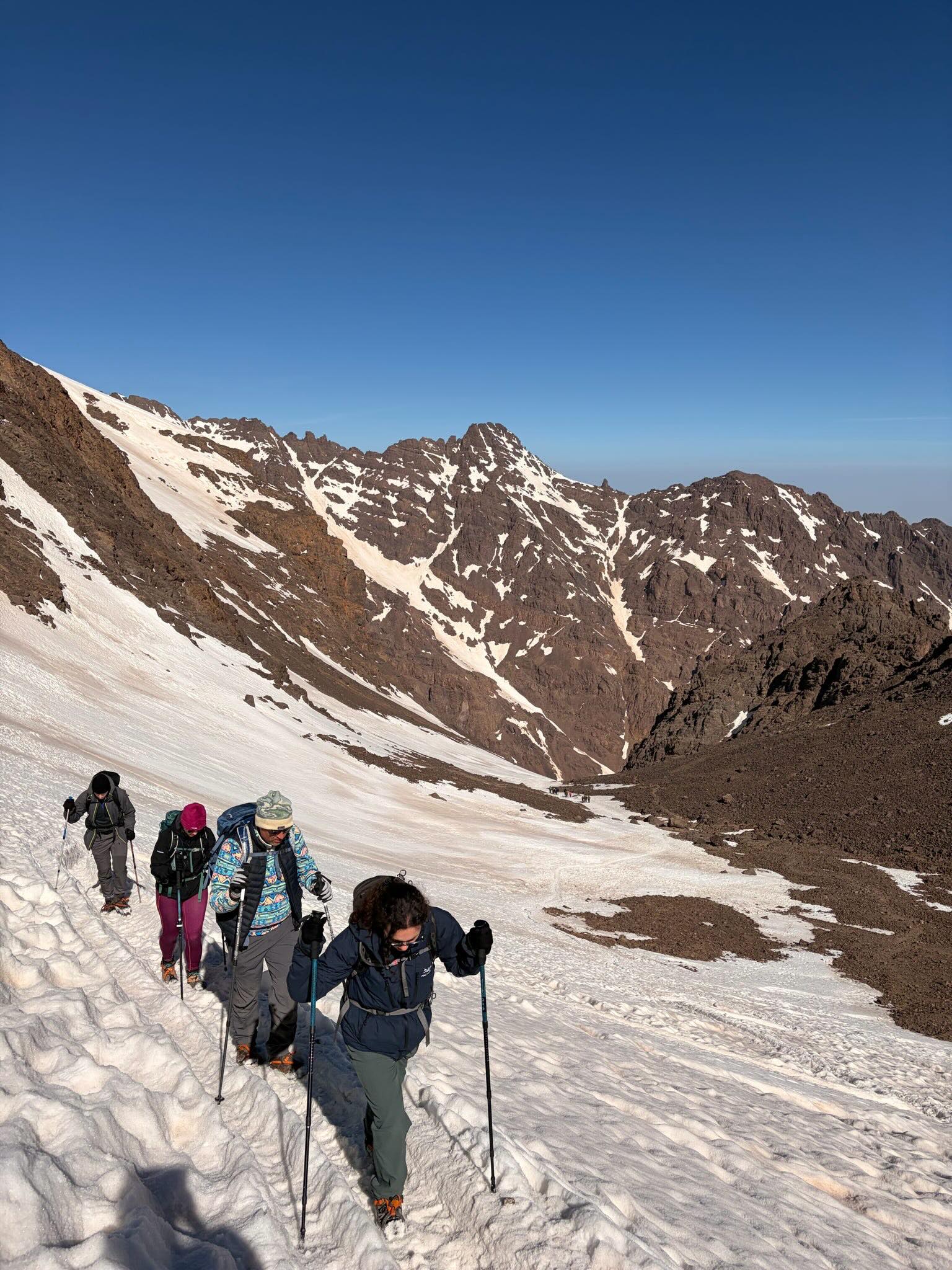
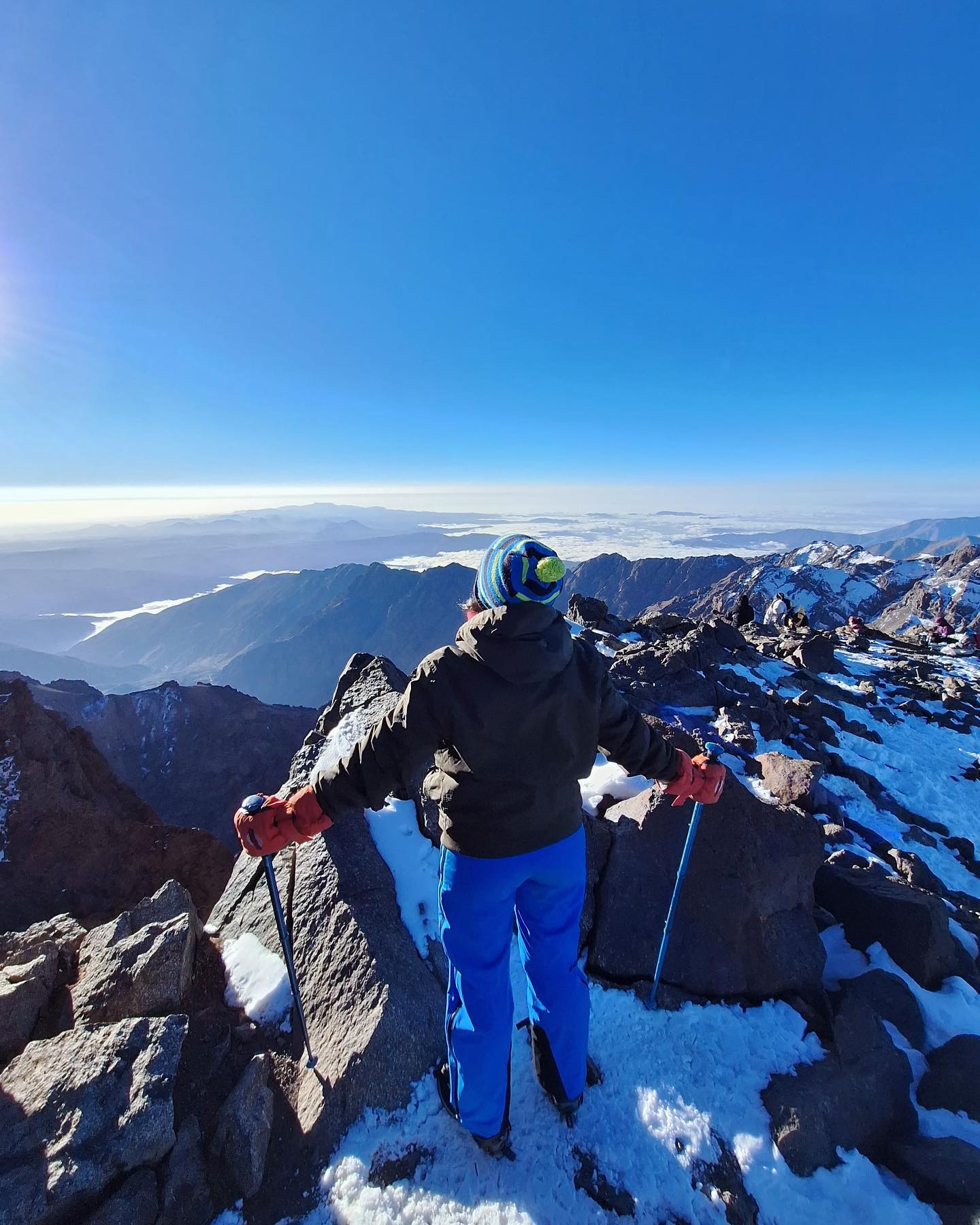
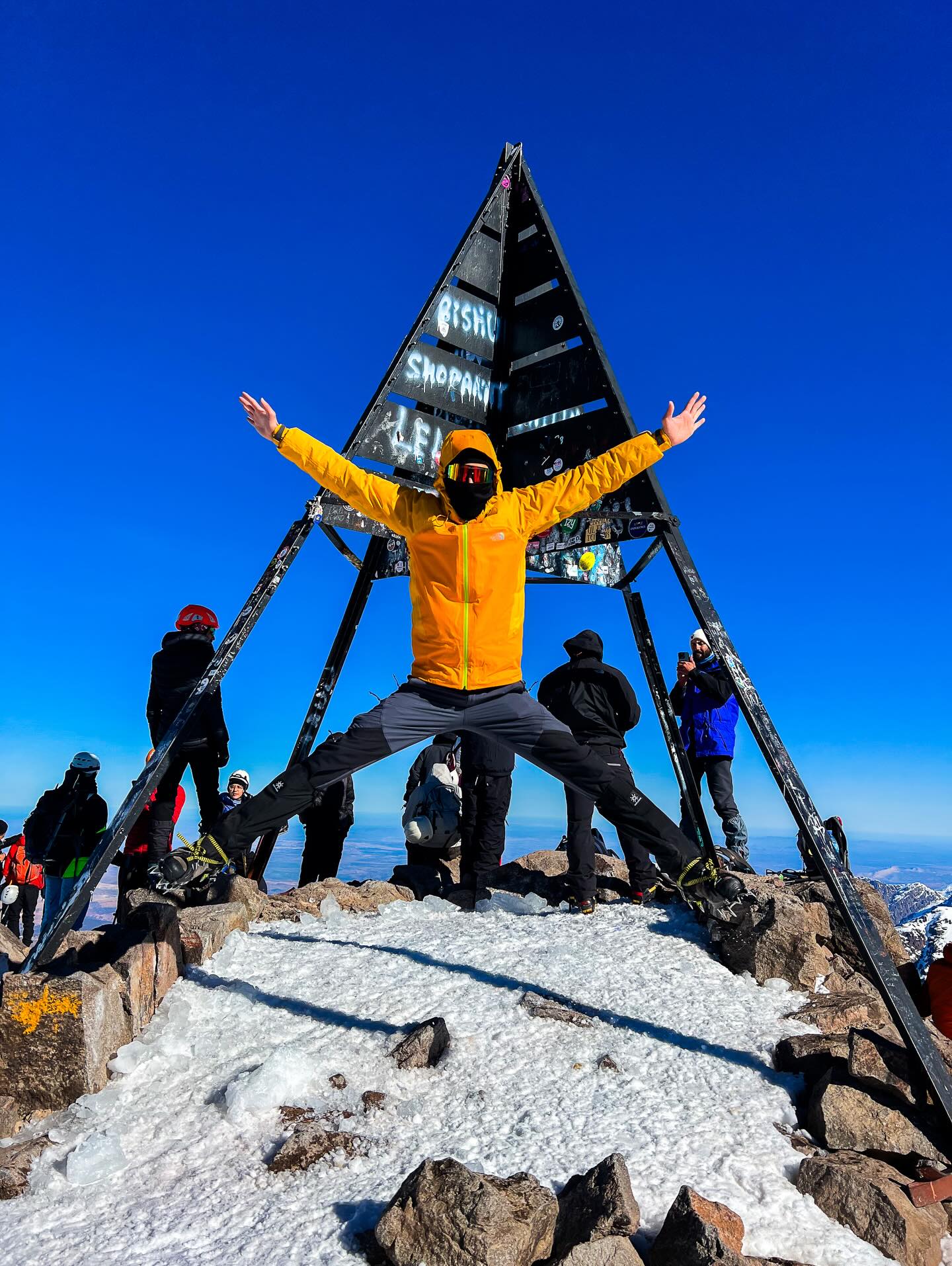
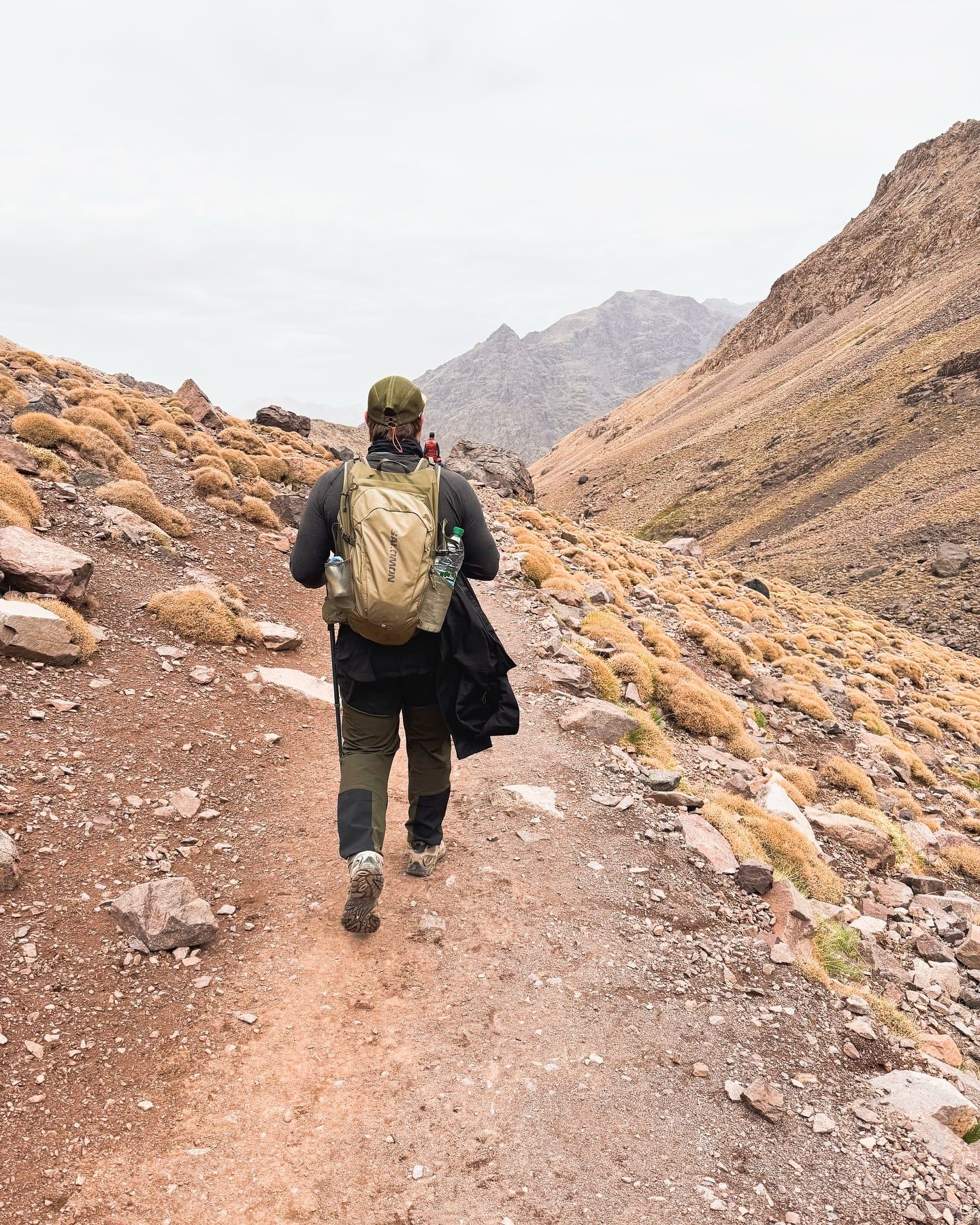
A combined tour of Mount Toubkal and the Sahara Desert offers an unforgettable five-day journey through Morocco's most dramatic contrasting landscapes. You will transition from the freezing, rugged alpine crests of the High Atlas Mountains to the warm, sweeping golden dunes of the desert, experiencing the ultimate North African adventure.
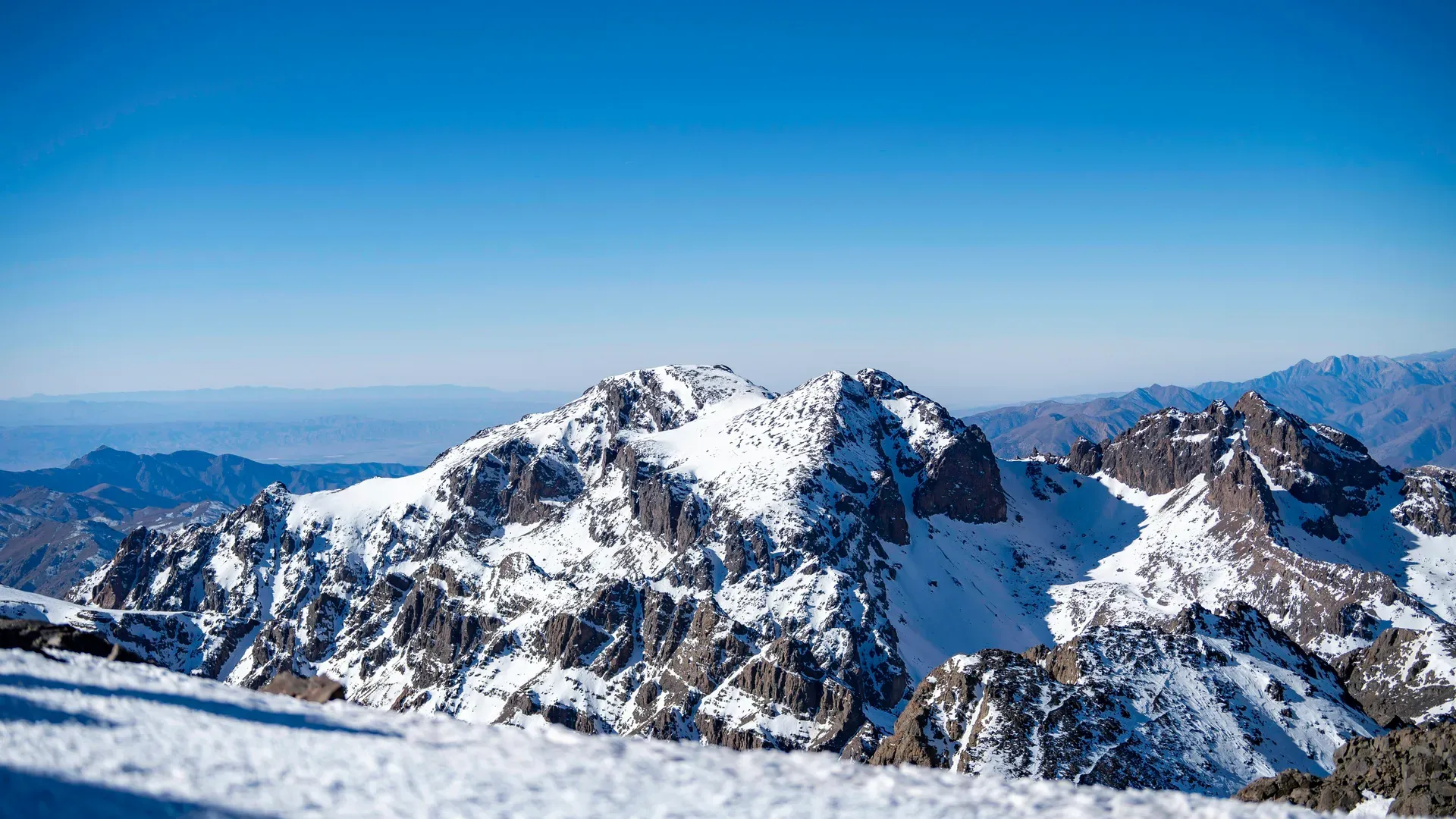
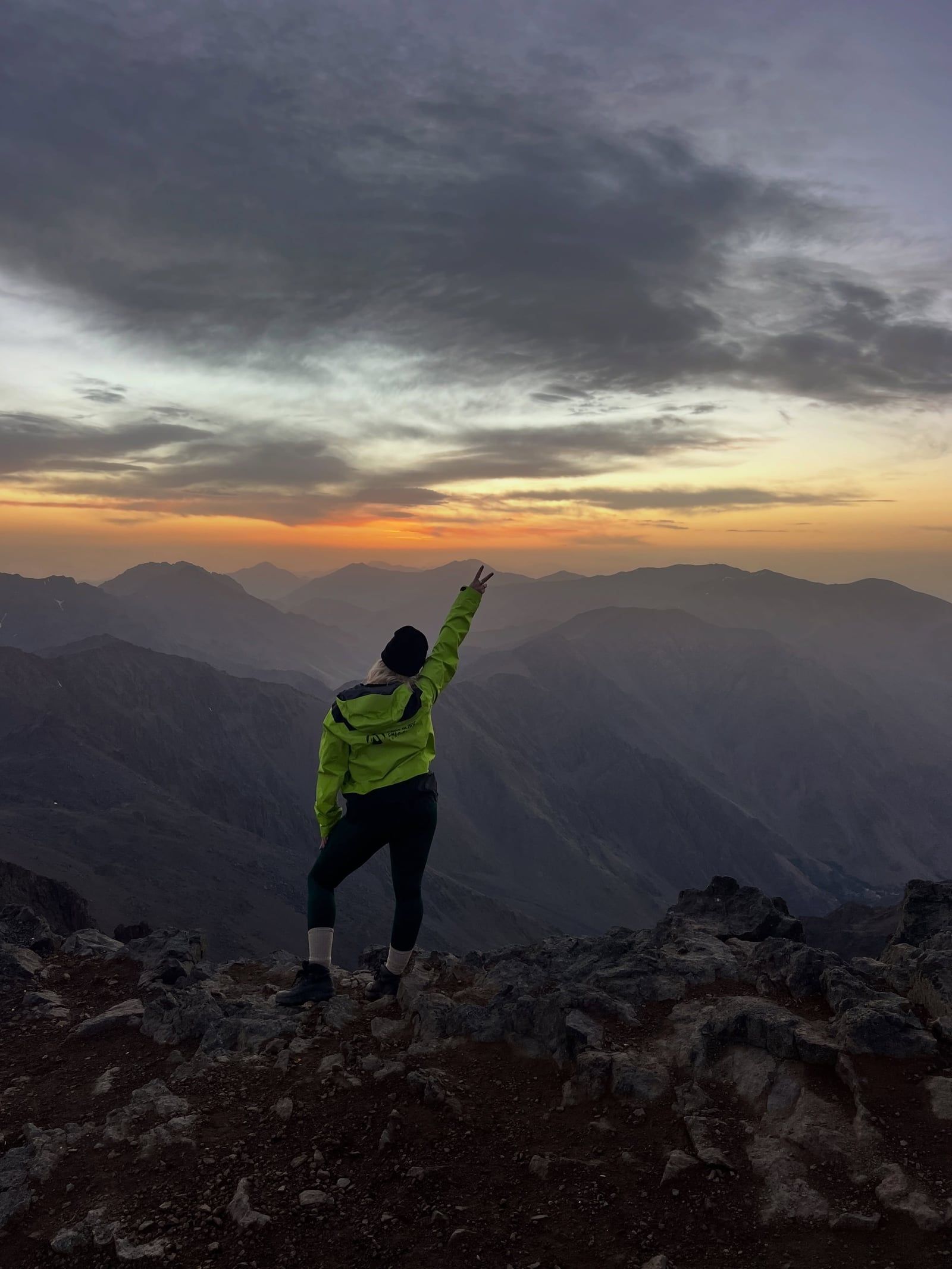
Challenge yourself to reach the 4,167-meter peak of North Africa's highest mountain. The sunrise views from the iconic metal pyramid marker stretch all the way to the Sahara.
Spend the night at 3,207 meters in a historic mountain hut. Share sweet mint tea and hot tagine with climbers from around the world in a classic alpine atmosphere.
Trek through the picturesque villages of Imlil and Aroumd. You will walk past terraced farmland, traditional stone houses, and lush walnut and cherry orchards.
Trade your hiking boots for a camel ride across the sweeping dunes of the Sahara. Arrive at a traditional tented desert camp just in time to watch the sunset.
Hike past this famous pastoral shrine nestled beneath towering volcanic cliffs. It serves as a major pilgrimage site for locals and a scenic rest stop for trekkers.
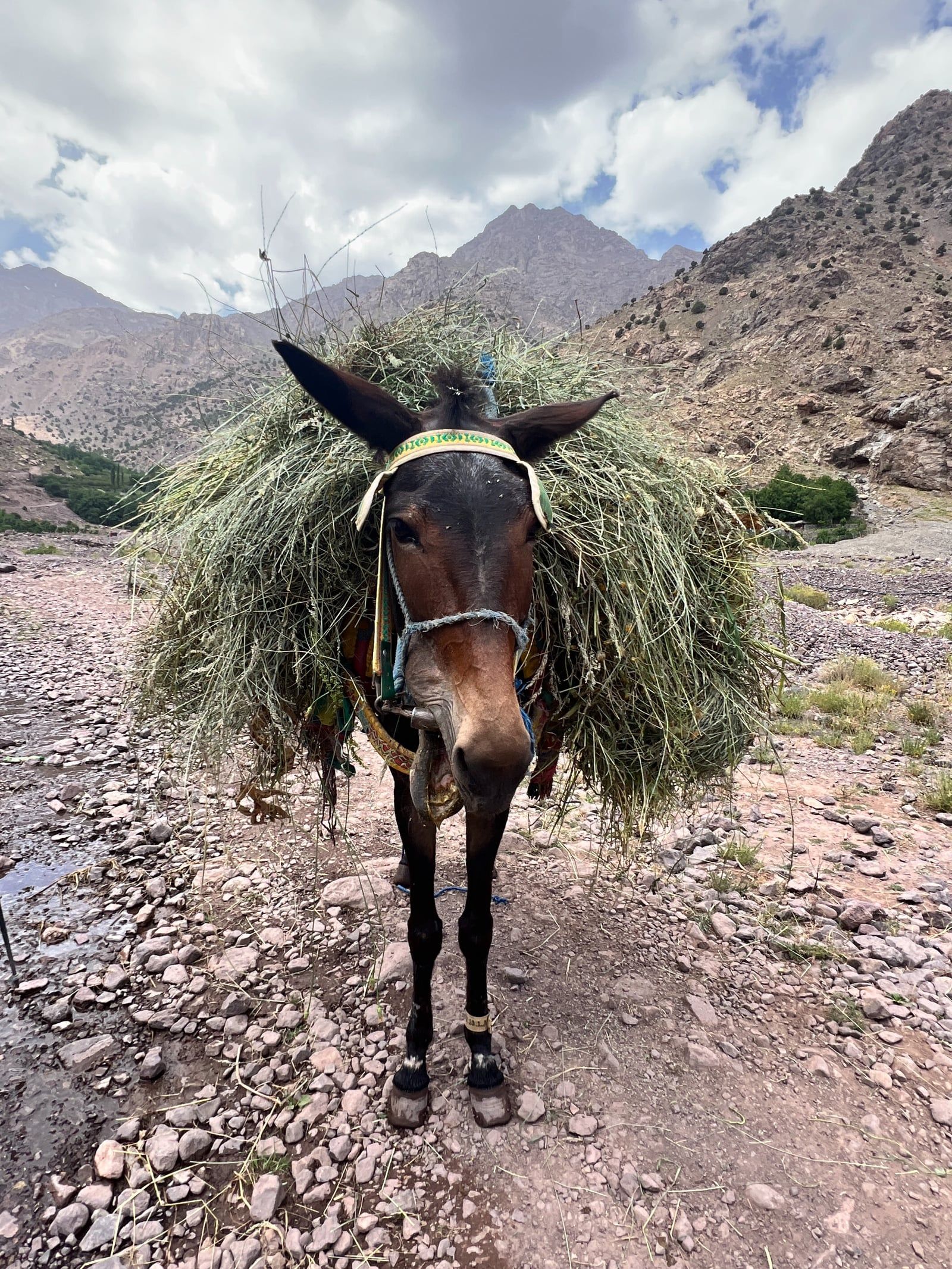
Experience traditional mountain logistics as local mules carry your heavy luggage up the steep trails, allowing you to focus on the demanding hike ahead.
Planning a combined Toubkal and Sahara trip requires careful preparation due to the extreme contrasts in climate and physical demands. Here is what you need to know before securing your spot on one of these multi-day adventures.
Most combined itineraries span 5 days. You can choose between a strenuous full summit ascent of Mount Toubkal or a more relaxed cultural trek through remote Berber villages before heading to the desert.
Following safety regulations enacted in 2018, it is illegal to climb Mount Toubkal without a licensed mountain guide. All organized tours include these certified guides to ensure you pass the official trail checkpoints.
The summit climb is highly demanding, requiring you to hike up to 17 kilometers in a single day with significant elevation changes. It is not suitable for young children, the elderly, or travelers with spinal injuries.
These comprehensive packages generally cover all transportation (including AC vehicles and mules), meals during the trek, an English-speaking guide, and accommodations ranging from mountain refuges to desert camps.
You must pack for both freezing alpine mornings and warm desert afternoons. Bring high-ankle boots, a bright head torch for the 5:00 AM summit push, and synthetic layers—cotton clothing is strictly discouraged due to hypothermia risks.
While the main tour price covers most logistics, you will need cash in Moroccan Dirhams. Expect to pay a nominal National Park entry fee of 20 to 30 MAD, plus extra for trail snacks and tips for your guides and porters.
Both featured 5-day tours offer a flexible cancellation policy. You can receive a full refund if you cancel at least 24 hours before your scheduled departure time.
Swipe to see more
| Cultural Atlas Trek & Sahara | Toubkal Summit & Sahara Desert | |
|---|---|---|
| Focus | Berber villages & heritage | 4,167m Summit climb & dunes |
| Duration | 5 Days | 5 Days |
| Accommodation | Tented camp & local stays | Mountain refuge, riad, desert camp |
| Price from | $588 | $941 |
Swipe to see more
Toubkal National Park: The park and the mountain trails are open 24 hours a day, 365 days a year. There are no official opening or closing gates.
Summit Timing: Most hikers wake up at the mountain refuges around 4:30 AM and depart between 5:00 AM and 6:00 AM. This early start ensures you reach the summit by sunrise and avoid the harsh midday sun during the descent.
Tour Logistics: Multi-day tours typically begin with an 8:00 AM pickup from your accommodation or a designated accessible point in Marrakech.
From Marrakech: The journey begins with a 63-kilometer (39-mile) drive south to the mountain trailhead village of Imlil. This takes about 1 hour and 30 minutes along winding mountain roads. Organized tours include private air-conditioned transport for this leg.
On the Mountain: From Imlil, the trek is entirely on foot. Heavy luggage is transported by local mules, which takes about 40 minutes to reach the higher village of Aroumd.
To the Sahara: After descending the mountain, tours utilize private vehicles to drive you across the country to the desert dunes, where you will transition to a camel ride to reach your final camp.
Spring and Autumn: The best months to climb Mount Toubkal are April to May and September to October. During these windows, the weather is relatively stable, and temperatures are moderate.
Summer: July and August are popular for non-technical hiking, but be prepared for extreme heat in Marrakech (ranging from 80°F to 100°F) before you reach the cooler mountain elevations.
Winter: November through March transforms the mountain into a dangerous, icy alpine environment. Climbing during this time requires specialized gear like crampons and ice axes, and is only recommended for experienced mountaineers.
Wheelchair Access: Mount Toubkal is entirely inaccessible for standard wheelchair users. The trails consist of rugged dirt paths, loose shale scree, and steep boulder fields. While specialized off-road wheelchair tours exist in Morocco, the summit climb is impossible.
Physical Fitness: The trek requires a high level of physical fitness. You will be hiking up to 17 kilometers in a single day with massive elevation gains. It is not recommended for travelers with spinal injuries, pregnant travelers, or young children due to the high altitude and steep drop-offs.
Mountain Refuges: The primary accommodation on the mountain is the historic Neltner Refuge (CAF Toubkal Refuge) situated at 3,207 meters. It features dormitory-style beds for about 90 people, shared bathrooms, and a dining hall serving hot meals.
Money: There are no ATMs in the gateway village of Imlil or anywhere along the mountain trails. You must bring sufficient cash (Moroccan Dirhams or Euros) from Marrakech to pay for park fees, snacks, and tips.
Food and Water: Tours include breakfast, lunch, and dinner. Bottled water and snacks can be purchased at small trailside stalls on the lower sections of the mountain.
The climb is highly demanding and requires excellent physical fitness. On summit day, you will hike a 17-kilometer round trip with significant elevation changes, navigating steep, loose shale scree at altitudes above 4,000 meters.
Yes, the Moroccan government made it mandatory to hire a licensed guide to climb Mount Toubkal following a safety incident in 2018. All organized tours include a certified guide to ensure you pass the official checkpoints.
Hikers typically stay at the Neltner Refuge at 3,207 meters. It offers basic, dormitory-style lodging with up to 27 people per room. It can be quite noisy, so bringing a sleep mask and high-quality earplugs is highly recommended.
You must pack warm synthetic or merino wool layers, a windproof jacket, beanies, gloves, and sturdy high-ankle hiking boots. A bright head torch is critical for the 5:00 AM summit push, and you should avoid cotton clothing entirely.
While the main tour price covers your guide, transport, and accommodation, you should bring cash for the nominal National Park entry fee, which costs approximately 20 to 30 MAD.
You do not have to carry your heavy bags up the mountain. Tours include the cost of local mules, which will transport your main luggage from Imlil up to the mountain refuges.
Climbing between November and March is dangerous and requires specialized winter mountaineering equipment, including crampons and ice axes. It should only be attempted by experienced climbers.
No. While tourists of all backgrounds can hike past the settlement, only Muslims are permitted to cross the stone bridge to visit the actual shrine. Non-Muslims must view the white-painted structure from the trail.
Because the summit exceeds 4,000 meters, altitude sickness is common. Symptoms include severe headaches, nausea, and fatigue. Your guide will monitor your condition; if symptoms become severe, the only cure is to descend to a lower altitude immediately.
There are no ATMs in the mountain village of Imlil or anywhere along the trekking route. You must withdraw enough cash in Marrakech to cover tips, souvenirs, and trailside snacks.
Browse verified tours with free cancellation and instant confirmation.
Find Tours


Starting from Marrakech, this tour takes you deep into the High Atlas Mountains for a guided trekking experience. You will walk through remote Berber villages and learn about local traditions directly from the communities that live there. This portion of the trip focuses on the cultural heritage and natural scenery of the mountain valleys. After exploring the Atlas, the tour heads south toward the Sahara Desert. Along the way, you will visit historic UNESCO World Heritage sites and transition into the desert landscape for a camel ride across the dunes. This combined itinerary offers a practical way to see Morocco’s diverse environments, balancing mountain hiking with a traditional desert expedition.
For a full refund, cancel at least 24 hours before the scheduled departure time.
English, French, Spanish


Over five days, this trip takes you from the high peaks of the Atlas Mountains to the dunes of the Sahara. You will begin with a guided ascent of Mount Toubkal, North Africa’s highest summit, where the trek offers clear views across the mountain range. The journey continues toward the desert, stopping at the historic Ait Ben Haddou Kasbah and the film studios in Ouarzazate. In the Sahara, you will ride camels into the dunes to reach a desert camp for an overnight stay before the tour concludes.
For a full refund, cancel at least 24 hours before the scheduled departure time.
English, French, Spanish